
Chapter I is “The Introduction” of And Keep Your Powder Dry as written in 1942. On page 2, Margaret Mead writes:
“The obligation of the scientist to examine his material dispassionately is combined with the obligation of the citizen to participate responsibly in his society. To the investigation of social materials to the end that we may know more —here—now—in America towards fighting the war in a way that will leave us with the moral and physical resources to attack the problem of reorganizing the world.”
(Berghahn Books 2000)
When reading And Keep Your Powder Dry, the time and purpose must stay on the surface. Mead was writing for people in a different century, with a very particular goal in mind. When she writes about the enemy, there’s no ambiguity who she is talking about and she isn’t talking about any present-day enemies. When she says we need to reorganize the world, she means it literally—the world as it was organized in 1942 was not going to survive the end of Nazi Germany. When she speaks of black Americans, the language is archaic. You wouldn’t know unless you are familiar with her story that she was respected by James Baldwin. Mead would not know what an ableist is. Mead was not a time-traveler.
It might not seem like I’m making the case to read this book, but hang in there with me…
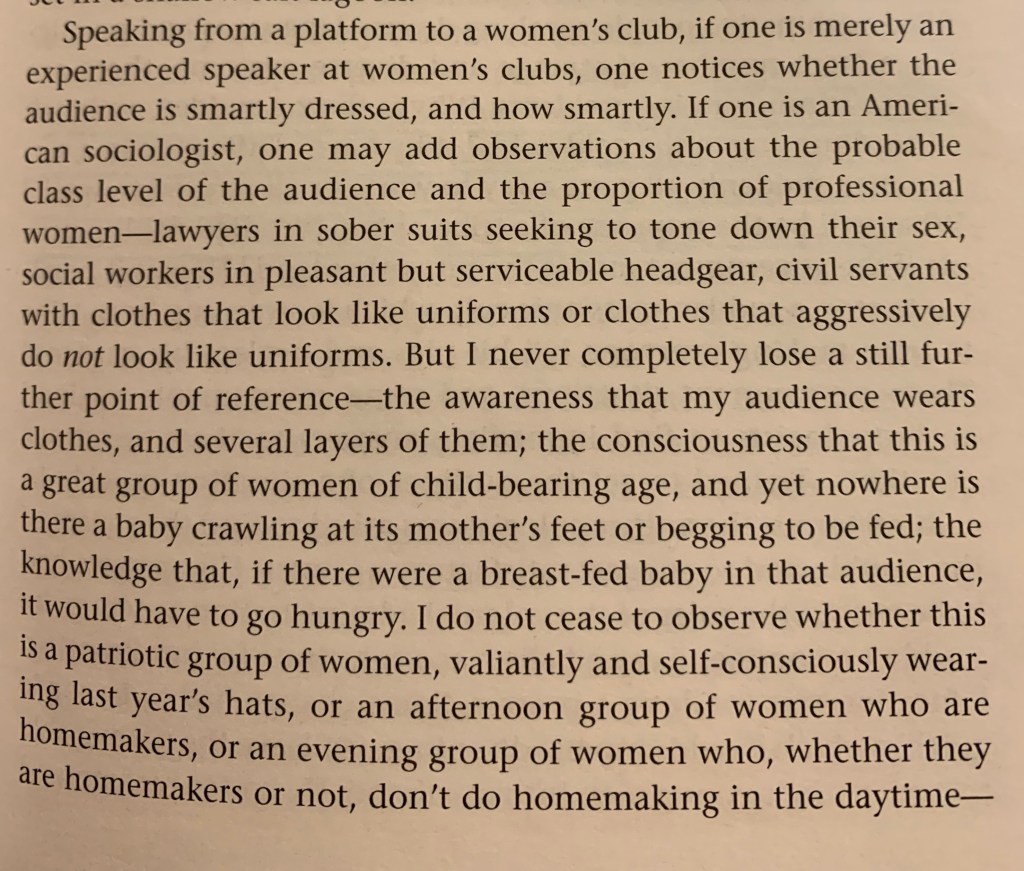
(Berghahn Books 2000)
Despite the distance Mead has from modern Americans (she was born 99 years before my oldest daughter), she has a clear understanding of what makes our culture unique in the world, because she understood what made other cultures unique. Her ability to contrast and compare us to other cultures allows us to see an American character structure that still very much exists in some very recognizable and surprising ways. Also, she is funny. I hope you keep coming back for the descriptions like, “…civil servants with clothes that look like uniforms or clothes that aggressively do not look like uniforms…” (2000).
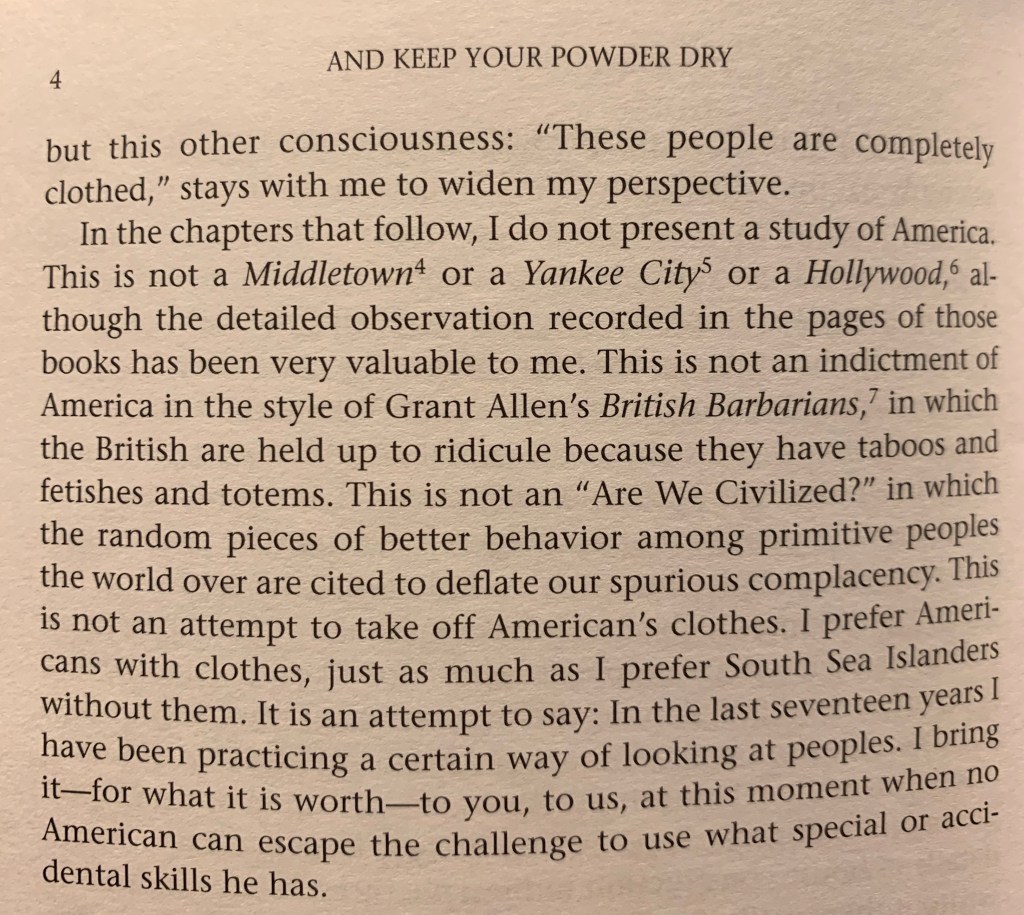
(Berghahn Books 2000)
Despite the seriousness of the subject matter, Mead brings a humor and wit that I hope you will find as engaging as I do. She also brings a strong understanding of the concepts she is teaching, able to present them with nuance and clarity, simultaneously. She understands not only the strengths and weaknesses of the American character, but the challenges and criticisms of the work she is undertaking. With And Keep Your Powder Dry, Mead gives us a framework for understanding the American character, and, despite some clear limitations brought by her position in the world and the time she was writing, she gives us a role model for how to talk about it.
She has a lot to offer, and presents it with understanding, humor, and self-reflection. I hope you’ll agree in the weeks to come. Thanks for reading with me.
 Recommended Reading for American Voters