
As I round out Chapter XIII, “Building the World New,” I feel it’s important to start off with a reminder that Margaret Mead was not a time-traveler. Mead wrote And Keep Your Powder Dry in 1942, for an audience at war. None of her writing should be interpreted as a commentary or position on any issues or events today. I remind you, because as she moves from teaching about the American character to what that means for our place in the world after the war, she is becoming more prescriptive and predictive. She is in part advocating, so it reads like advocacy.
(Berghahn Books 2000)
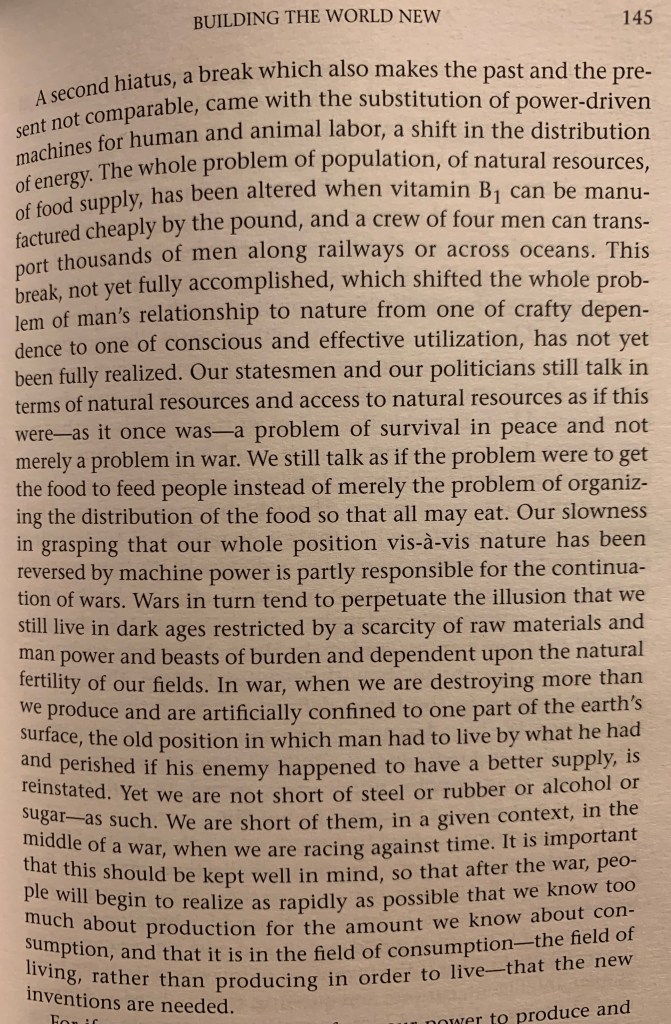
“…we know too much about production for the amount we know about consumption” (2000) was written in 1942, but could appear on a billboard today. That lack of understanding, Mead clearly ascertained, perpetuates war in as much as war is a competition for resources.
(Berghahn Books 2000)
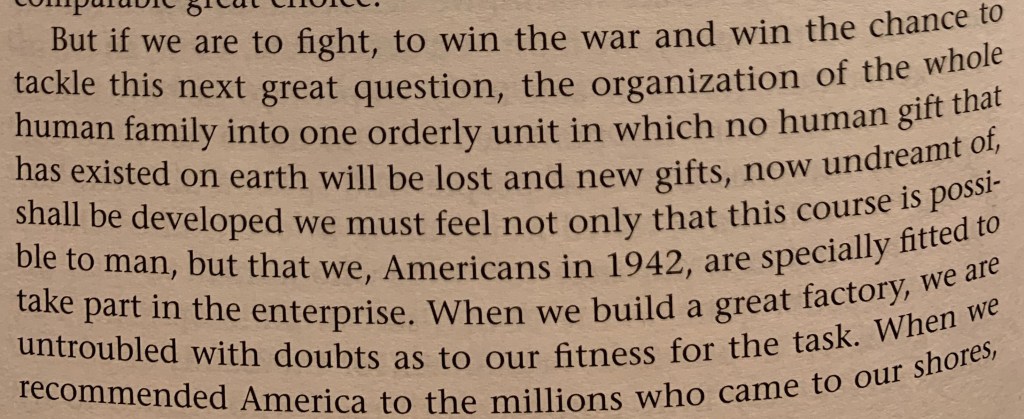
More and more, Mead uses the word order. I initially had a knee-jerk reaction to the word, but it is clear that she means order as the ability to live together without violent hostility.
(Berghahn Books 2000)
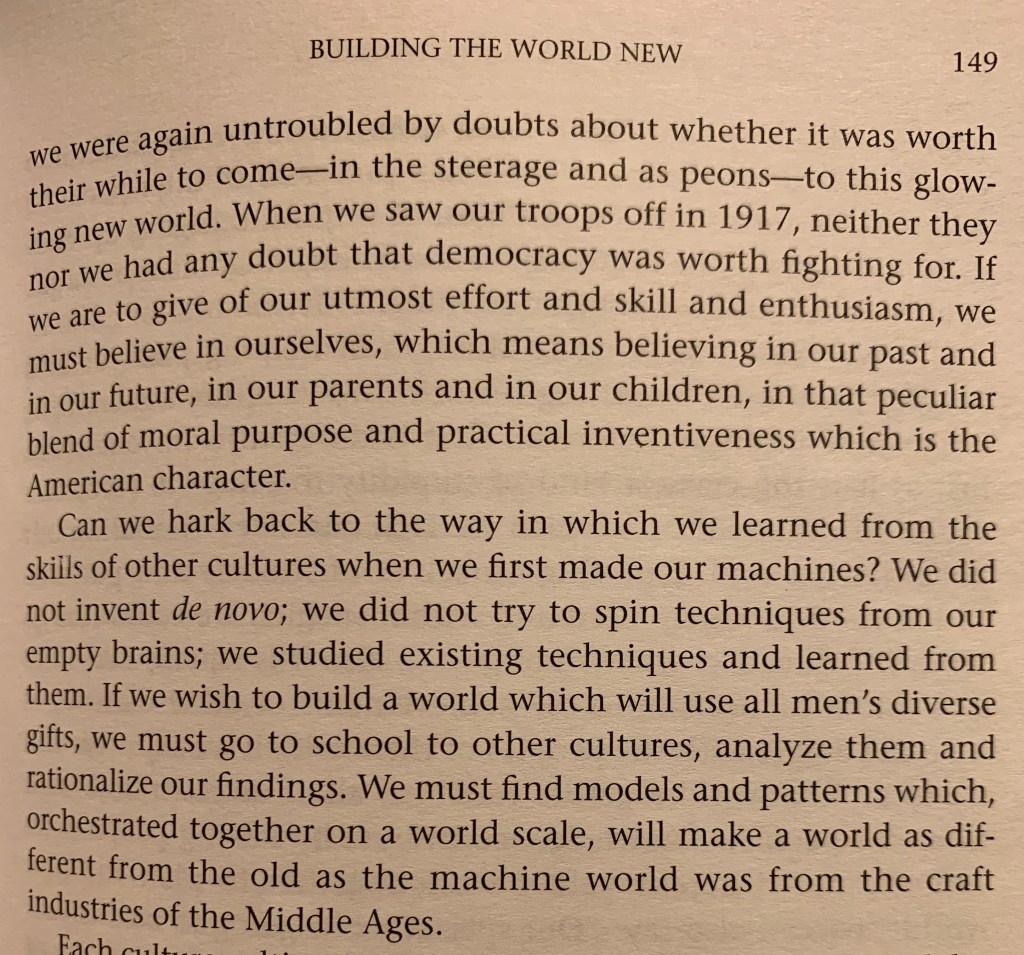
If we want a world which benefits from the gifts of all peoples, we must know what their gifts are. That seems pretty logical.
(Berghahn Books 2000)
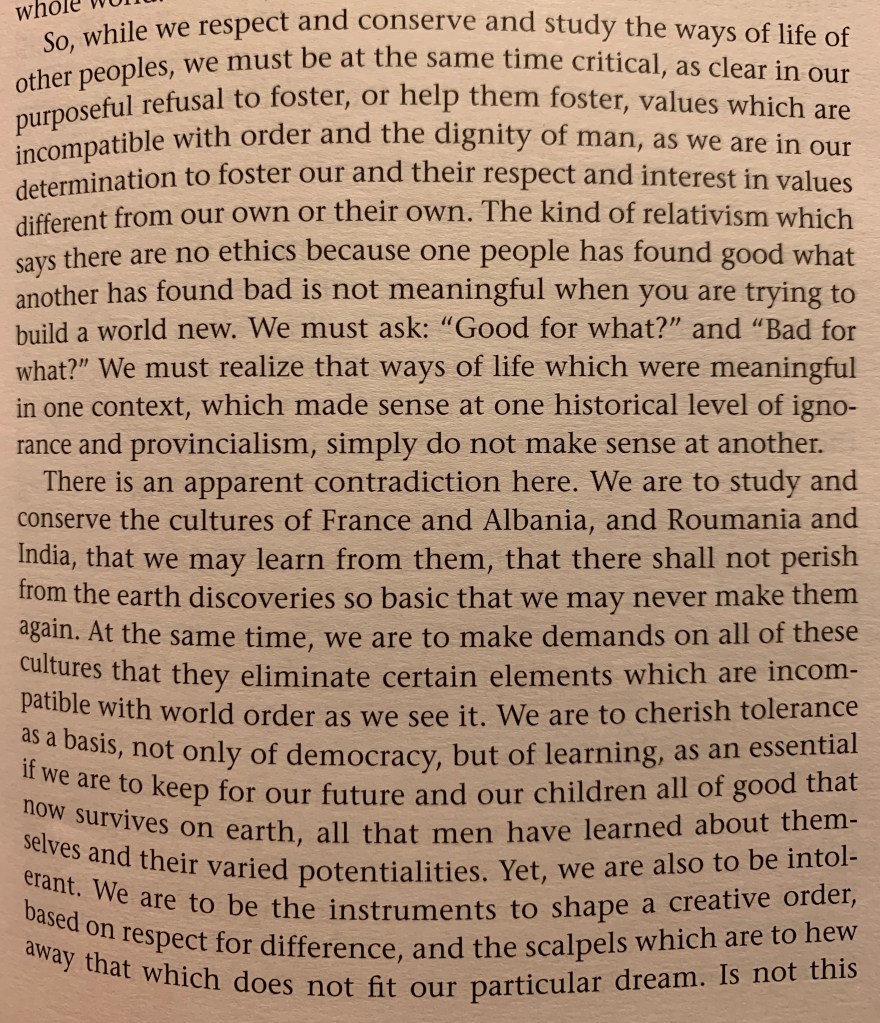
I love how she handles intolerance of intolerance and the (apparently) old criticism that those who will not tolerate intolerance are just perpetuating the thing they hate. She articulates better than anyone I’ve read why we cannot tolerate intolerance. This profound skill for handling nuance without jumping to accusations of hypocrisy makes her work incredibly compelling and rich.
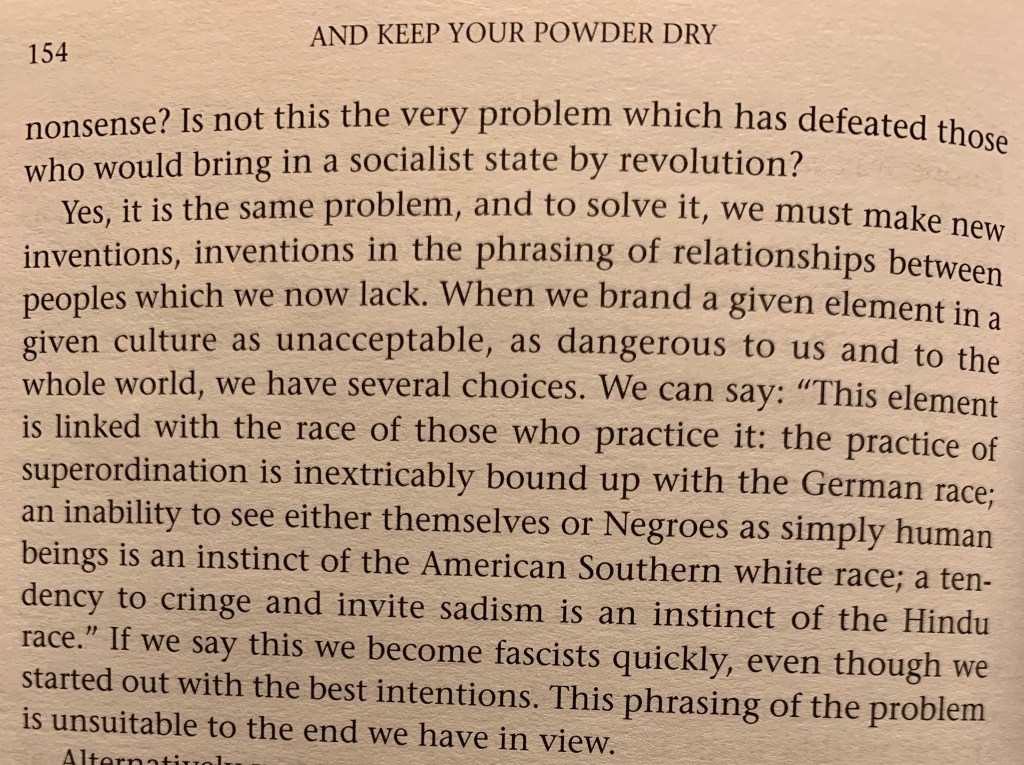
(Berghahn Books 2000)
In typical Mead fashion, she first reminds us of our American strengths and inventiveness here, and then explains how our weaknesses might send us down the wrong path. She, then, turns her attention to how we can go down the right path. She does it, though, with some palpable disdain for the Germans, which is easy to forgive given they had Hitler in charge at the time.
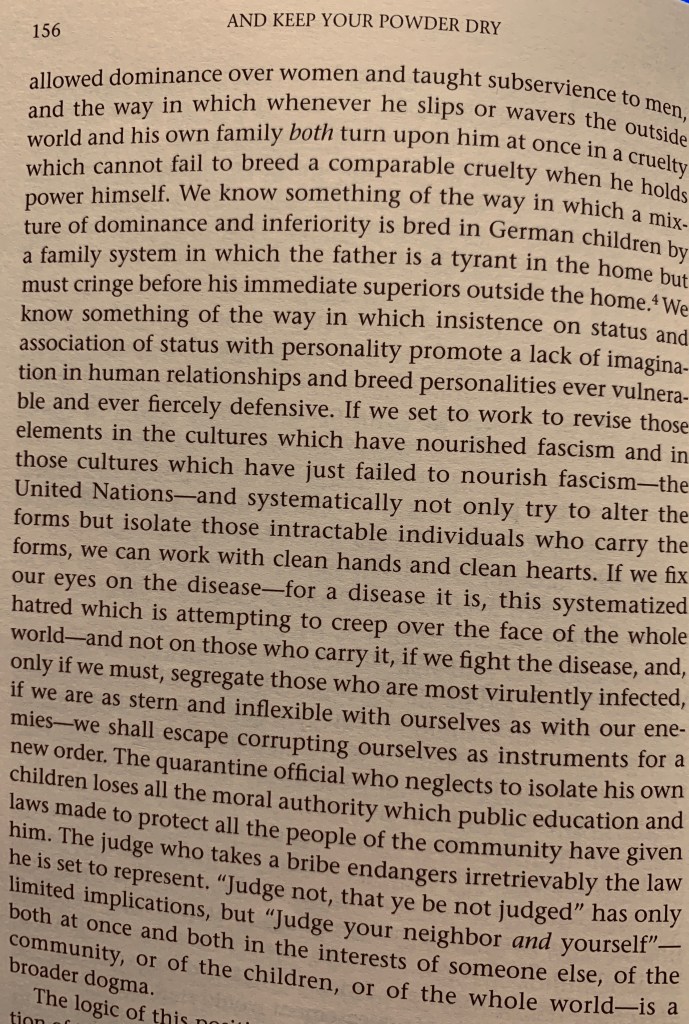
(Berghahn Books 2000)
Figuring out how to avoid corruption as we uphold our values was of paramount importance to Mead, but she was not making a value judgment. She was telling us that the American character demands it. It’s a fine distinction, but it’s vitally important. American character means that we must uphold our values and do what’s right (or at least actively try to) in order to succeed.
 Recommended Reading for American Voters