
As we near the end of And Keep Your Powder Dry, Margaret Mead increasingly turns her attention to the future, hoping to encourage a right and moral path forward. Having seen the Great Depression, and believing it was a moral failing, she did not want her nation to walk into the same trap. She wanted us to be very clear about what our values are, and to strive to represent them.
“Building the World New” is the title of Chapter XIII. We exist beyond her imaginings in 1942. Characteristically, though, for not knowing our world, she sure knows us very well.
(Berghahn Books 2000)
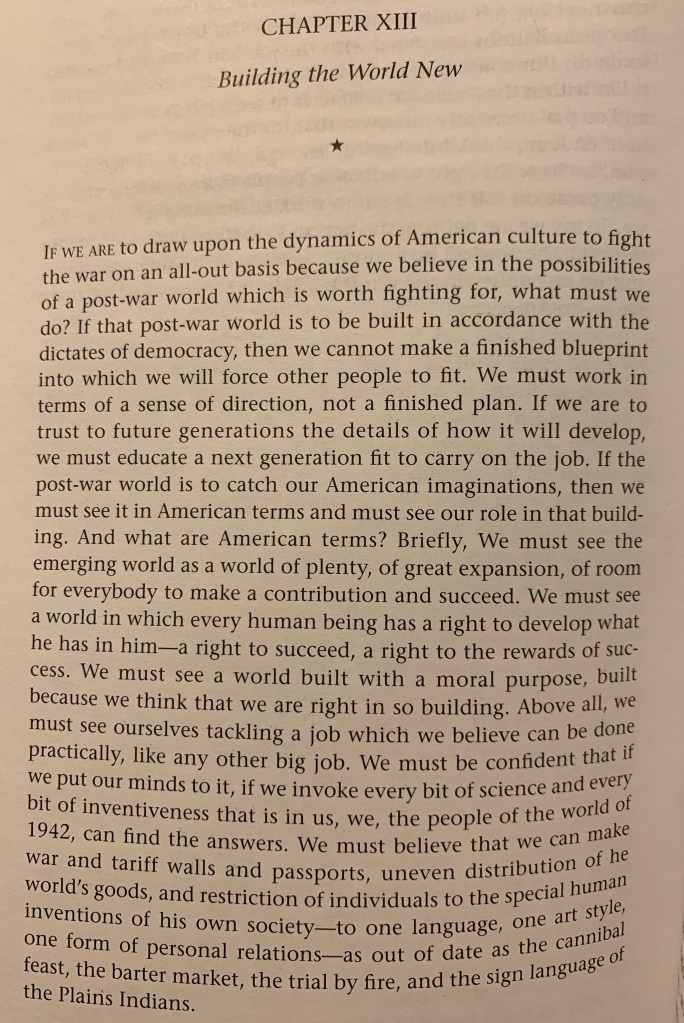
Mead reiterates a point she has made over and over: democracy requires an uncertain future. We cannot write the blueprint for future generations, because that would take away their right to self-determination; we can only give a sense of direction. She says, though, that we must see the emerging world as a world of plenty.
What does that mean in 2020, when the population is considerably larger than in Mead’s time and the reality of finite resources is more immediate? I would argue that our direction, that hard work will lead to success, is the right path, but our commercial blueprint, that success means plenty of stuff and increasing amounts of it, could use modernization.
(Berghahn Books 2000)
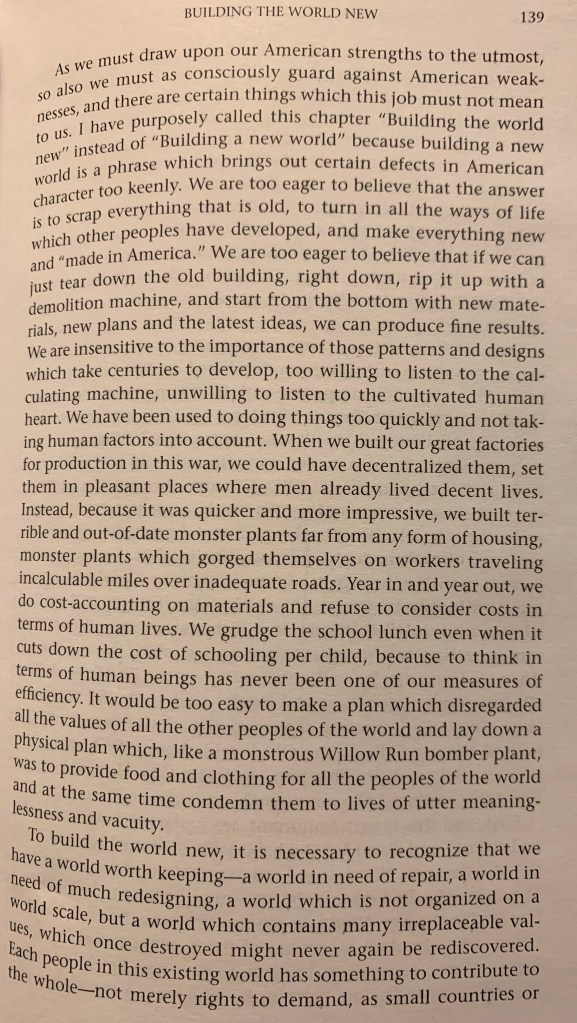
How familiar is this idea that we begrudge school lunch even though everyone knows it saves money in the long run? It’s only been prevalent for at least eighty years, apparently.
She notes that it could be very easy for us to lay down a plan that provides for food and shelter for all people but nothing very meaningful to life, much like our bomber plants provided jobs but disregarded transportation to them.
(Berghahn Books 2000)
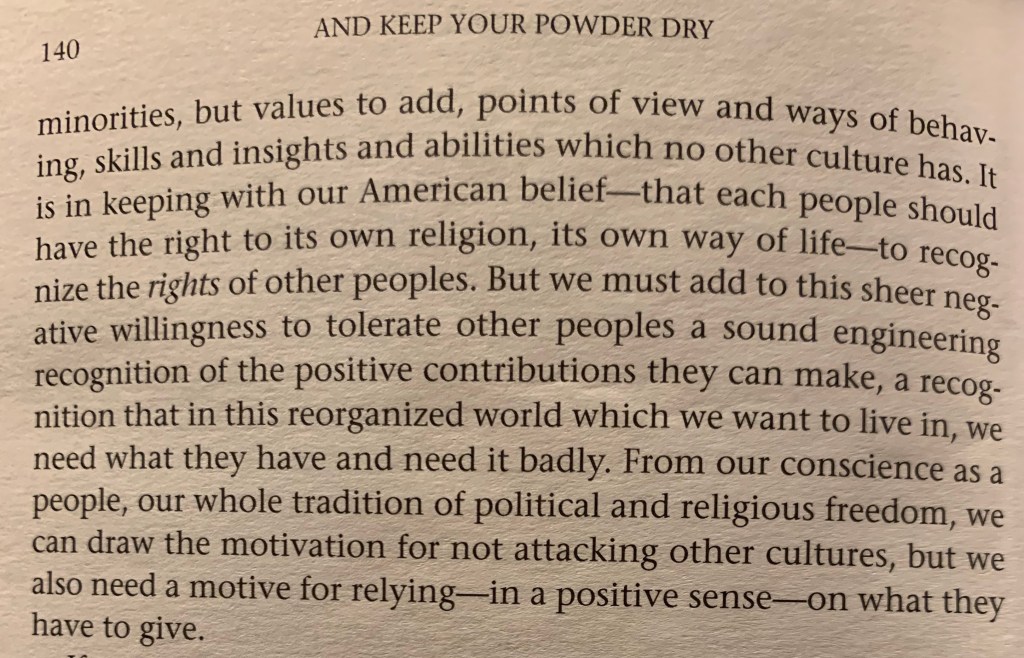
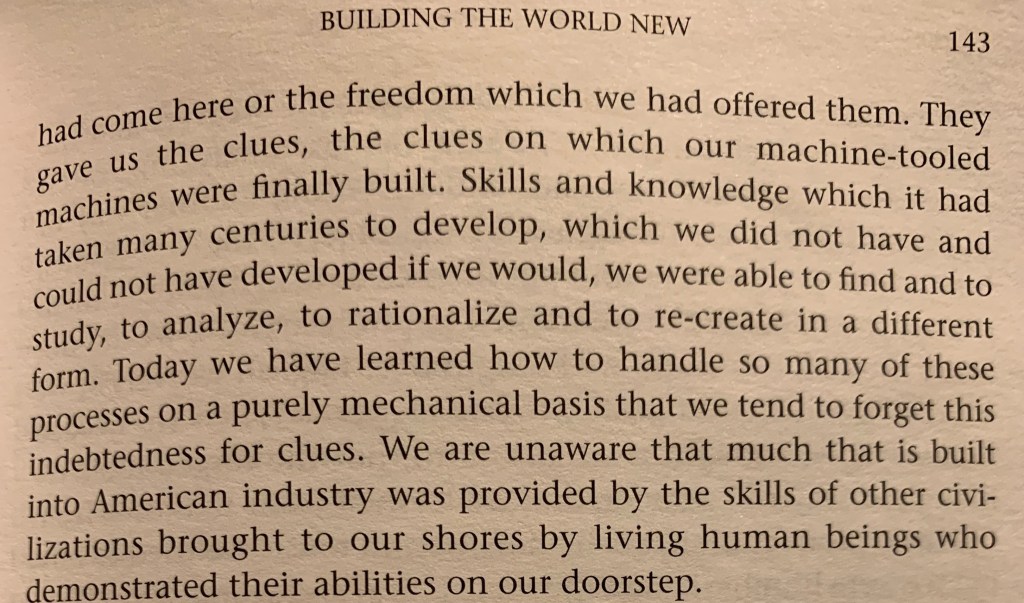
She is strong in her assertion that it is not enough to recognize the rights of minorities. To lead with our values, we must recognize that we, as Americans, fundamentally need other cultures. It’s not good enough to believe that they have a right to exist; we need to see that it’s in our best interest that they do exist. They have knowledge we do not have, being we are so quick to leave behind old ways. We aren’t going to be able to develop that knowledge on our own, because our culture isn’t built for it. We do need that knowledge, though, to innovate, which means learning from others.
(Berghahn Books 2000)
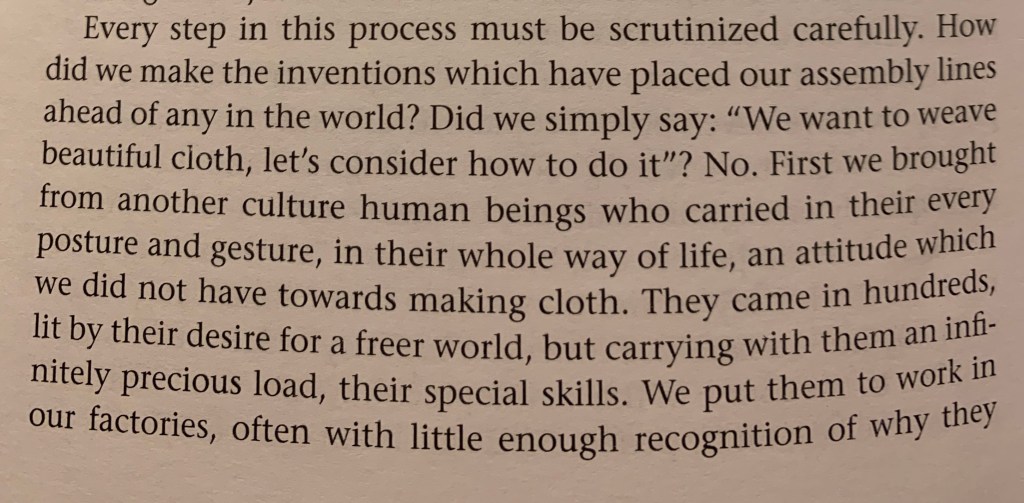
She expounds upon the importance of immigrants to helping us build the factories that defined the America of her time. We did not build machines that successfully made clothes through sheer imagination.
(Berghahn Books 2000)
As she makes the case for why we need to value the rights of immigrants and the skills that they bring, she again shows her remarkable understanding of how our strengths and weaknesses often come from the same place. Her knack for bringing clarity to nuance, so you can understand the subtleties of her ideas, is unique and rare. I can’t think of anyone today who does it as well.
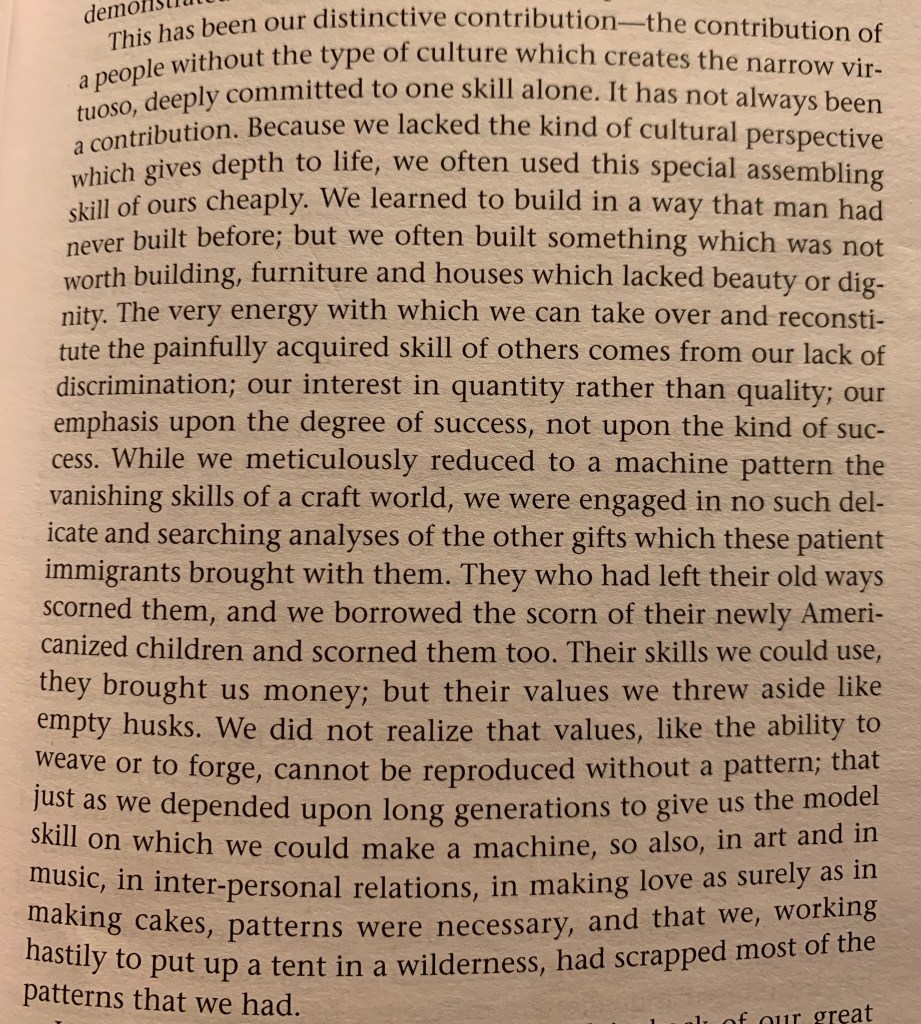
“They don’t make ‘em like they used to” is a common complaint here. Is there not an American alive who doesn’t think we used to build things of better quality? This is an old, favorite American past time, remembering back to a day that apparently never actually existed. Remember, Mead’s contemporaries had just started building neighborhoods for cars, forget homes for televisions and computers. We’ve been complaining about this for a long time.
Mead seems to be telling us that, when we gripe about how poorly we make or do things these days, it’s a good time to turn to other people who know how to do well that which we do poorly.
Presently, we have an extraordinary opportunity to discover things about ourselves, and learn. Through this pandemic, we will have an unusual opportunity to see how different cultures react to the same threat, what is says of their values, and how they fare when it’s all over. If we pay attention, we can learn a great deal about our present-day strengths and weaknesses, those of other nations, and how we can all work together to build a stronger world for the next generation.
 Recommended Reading for American Voters