
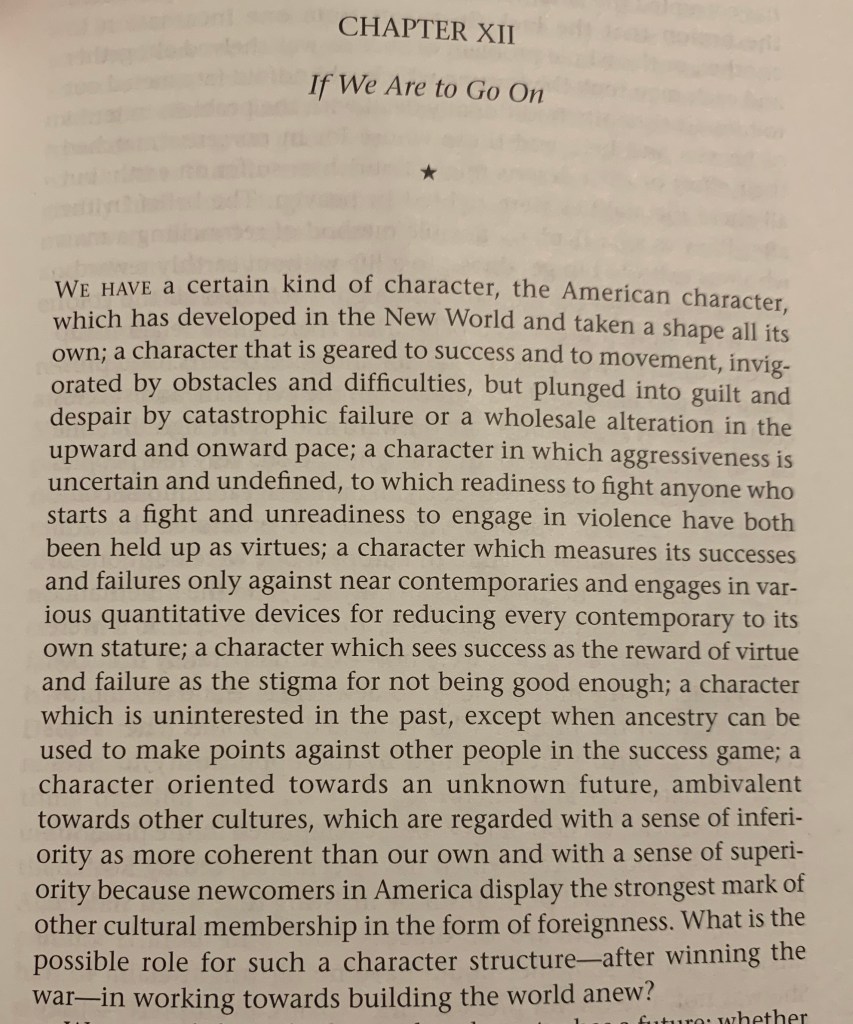
In the first paragraph of Chapter XII, “If We Are to Go On,” Margaret Mead summarizes all she has taught about the American character in And Keep Your Powder Dry, a book originally published in 1942.
(Berghahn Books 2000)
She wants us now to consider our place in the world. She does not know the future as we do; she is focused on the events of her day. Hitler is the clear enemy, a tyrant who threw the whole world into despair. For America in 1942, fascism was the undeniable enemy. Mead wanted Americans to understand that we were, because of our national character, completely at odds in our values to fascism and also highly susceptible to it.
This chapter is her effort to help us inoculate ourselves, and by extension the world, to the great evil that defined her time.
(Berghahn Books 2000)
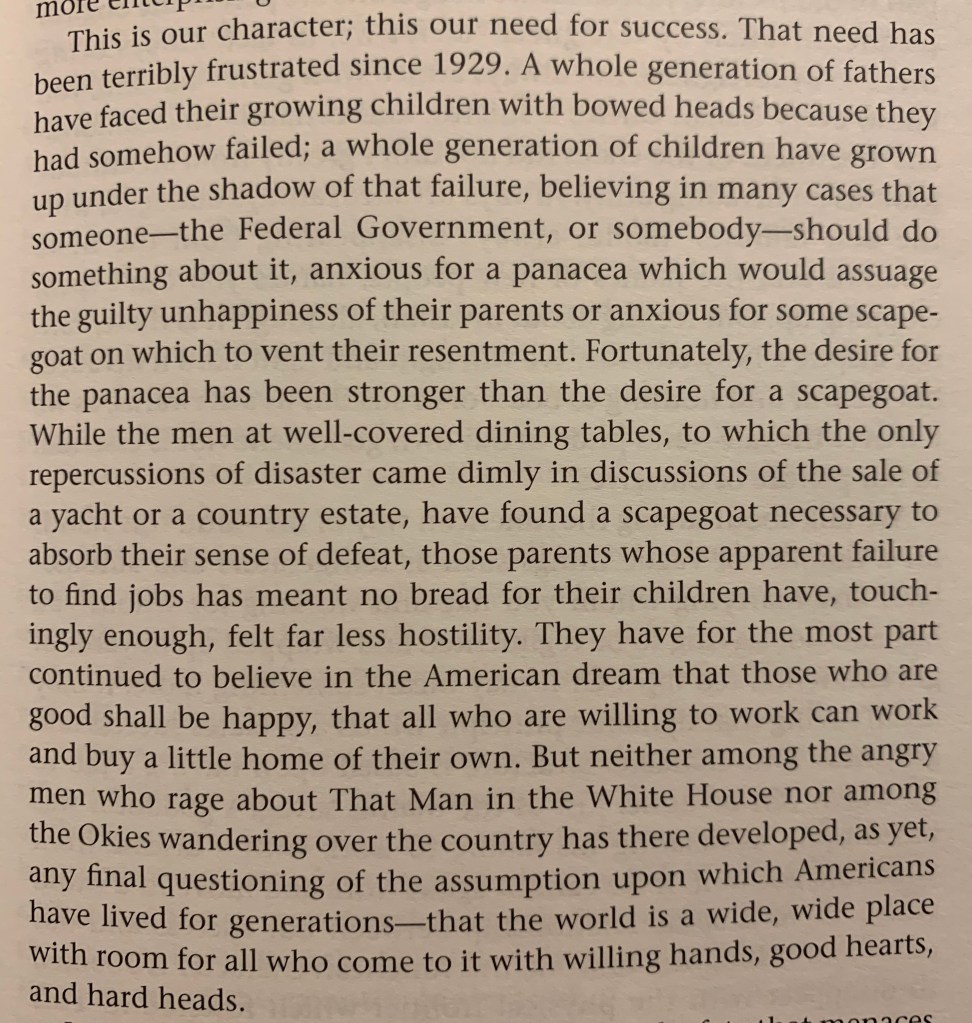
Panaceas and scapegoats. Sound familiar?
She says that the rich men of her time found a scapegoat when times got hard, but Americans who lost everything in the Great Depression or the Dust Bowl didn’t fall victim to the same hostility. Average Americans, she maintained, still believed that if you were good and worked hard, you could build a happy life for yourself.
(Berghahn Books 2000)
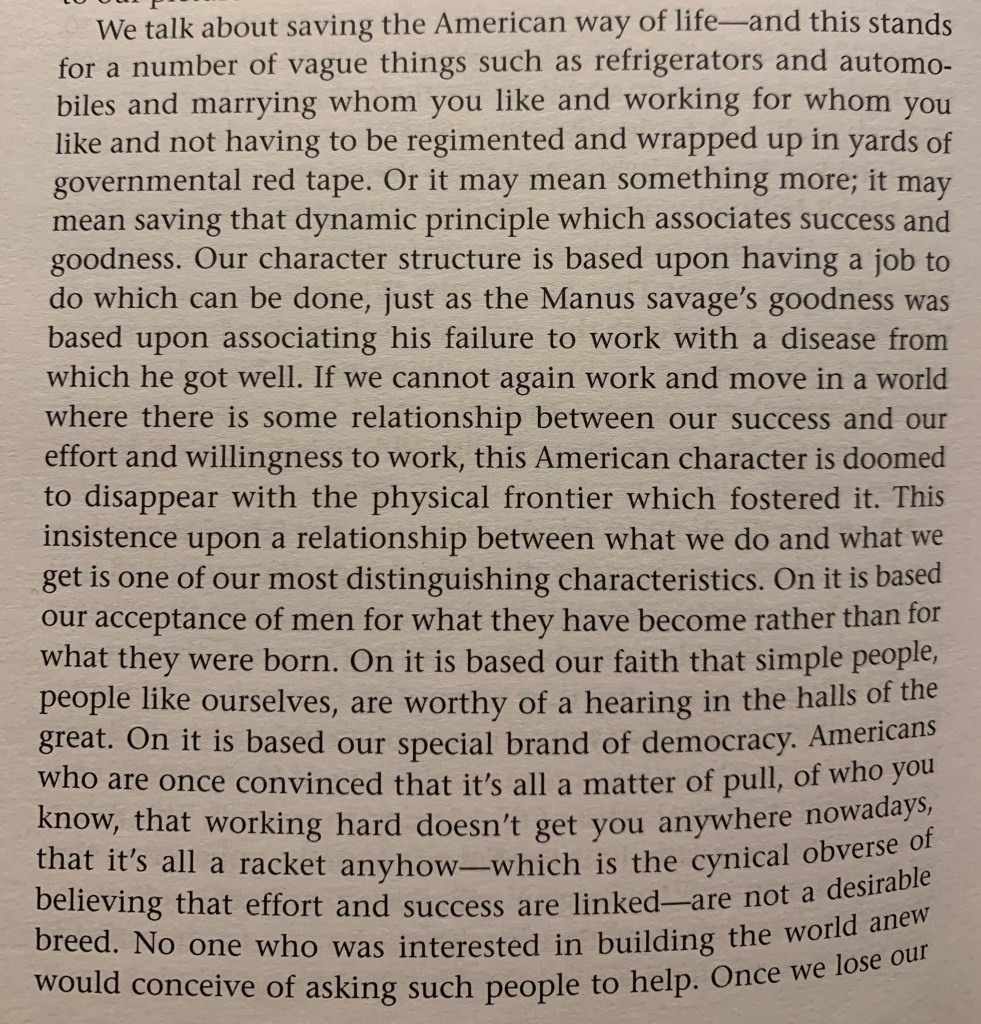
She says that our belief that hard work leads to success is vital for us. We must believe it. She says it is fundamental to our belief that you can rise above the station to which you were born through your own effort.
She warns against cynicism in a nation who has based everything on this premise, because the belief requires a faith in it. If you don’t believe your hard work will get you anywhere, what is the point of hard work? This is especially dangerous when we believe that success is usually ill-gotten, she warns.
For Mead, cynicism is a very real threat to American democracy. She explains…
(Berghahn Books 2000)
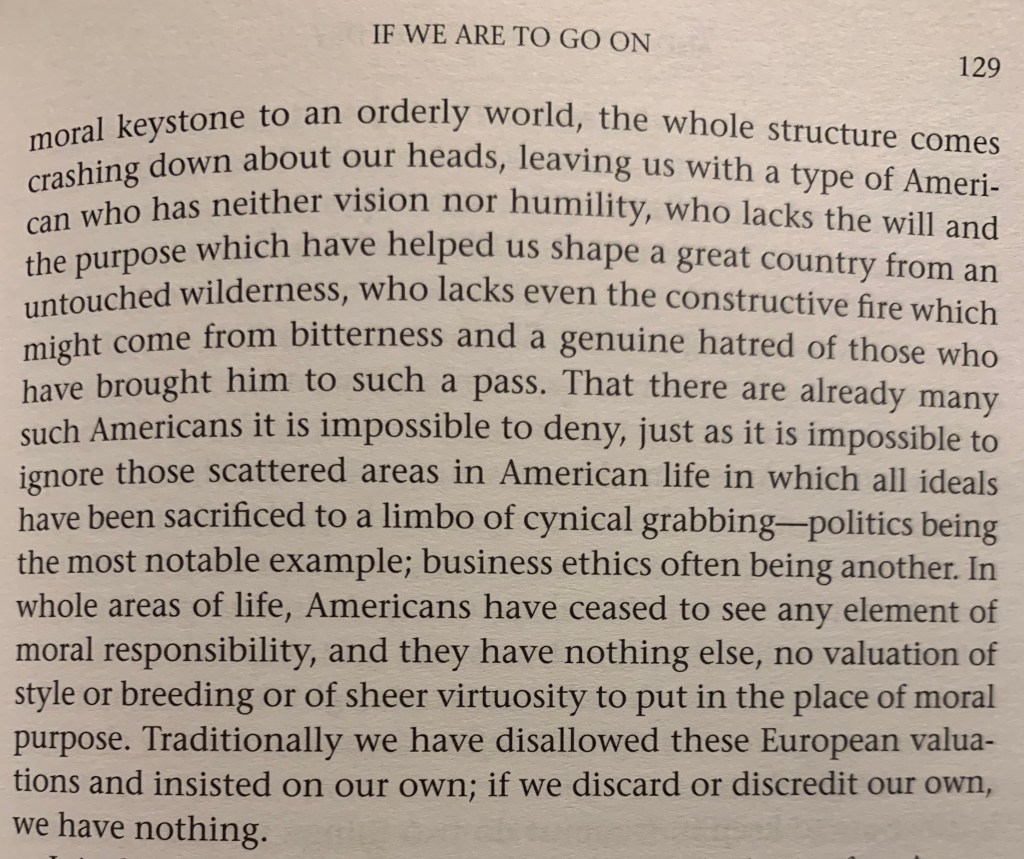
First, she delineates between average Americans and politicians and business men, before she brings them all back together. She already sees our ideals corrupted in the halls of power and readily acknowledges that. That’s not the cynicism she’s warning against, exactly. She is concerned that if we allow that abdication of moral responsibility to continue to overtake various areas of American life, and Americans!, we can seriously lose our way.
She then warns that if we create that moral vacuum (where we say being good has no bearing on our success or our progress), we run a very real risk that a fascist, the great enemy of her day, could fill it. Here is how she explains…
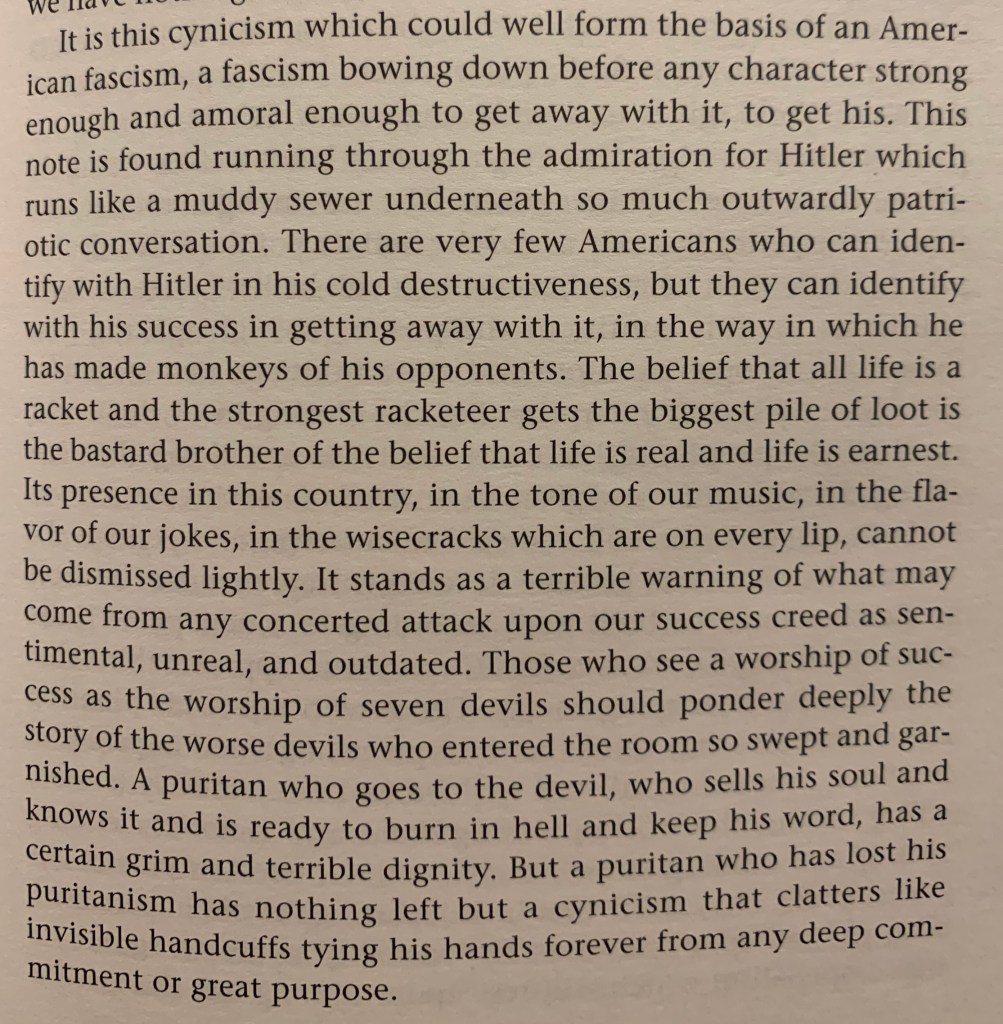
(Berghahn Books 2000)
She calls out the admiration she was seeing expressed for Hitler among some Americans in 1942, and she strongly condemns them. She warns that praise upon Hitler is a profound moral danger to America, and she is worried about the moral decay she is seeing. She is concerned that cynicism about our values, and our success creed (do right + hard work = success) in particular, could very well turn us into our enemy.
It’s 2020 now.
Do we see “our success creed as sentimental, unreal, and outdated?”
Will we “…[bow] down before any character strong enough and amoral enough…to get his?” (2000)
I don’t know, but I am asking.
 Recommended Reading for American Voters