
Chapter XI is titled “Are Democracy and Social Science Compatible Each with Each?” Here, Margaret Mead talks specifically about social engineering, what it means in terms of what she is doing with And Keep Your Powder Dry, and the criticism she has received or knows she will. She answers the criticism mostly by showing that she’s thought a great deal about the question: mustn’t this road of assessing people scientifically and using their strengths as tools lead to fascism, the very thing we were fighting against?
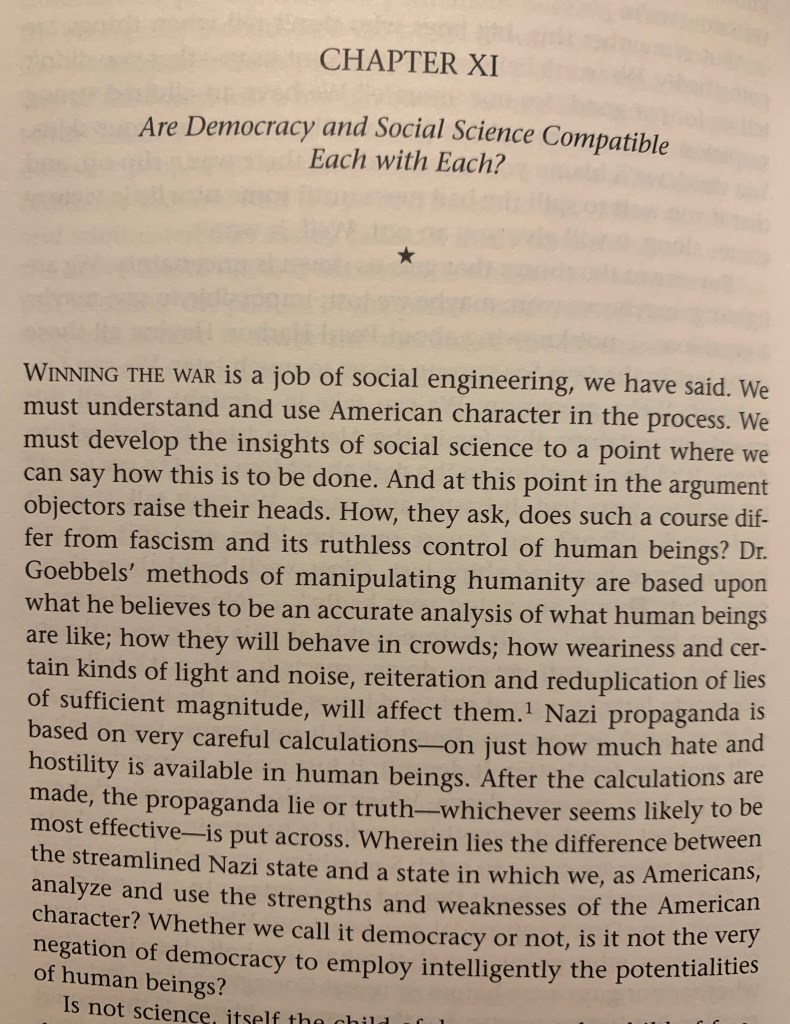
(Berghahn Books 2000)
Her answer is ultimately that, no, social engineering by way of the scientific examination and use of culture does not have to lead to fascism. First, though, she describes the ways that it can, even in America.
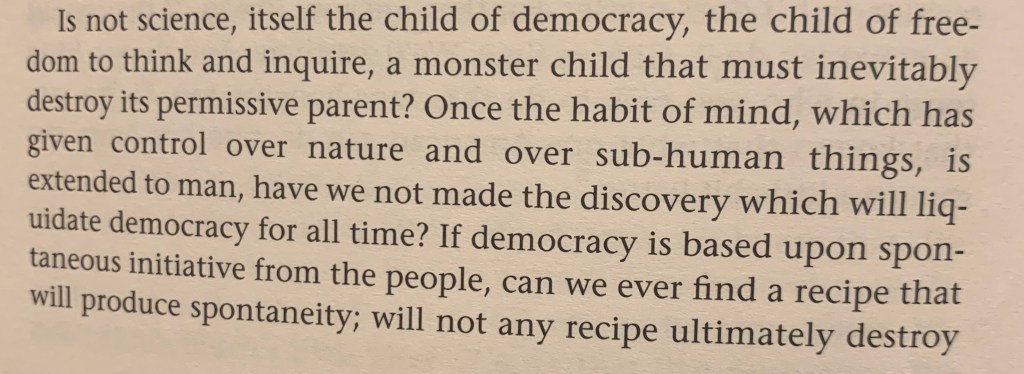
(Berghahn Books 2000)
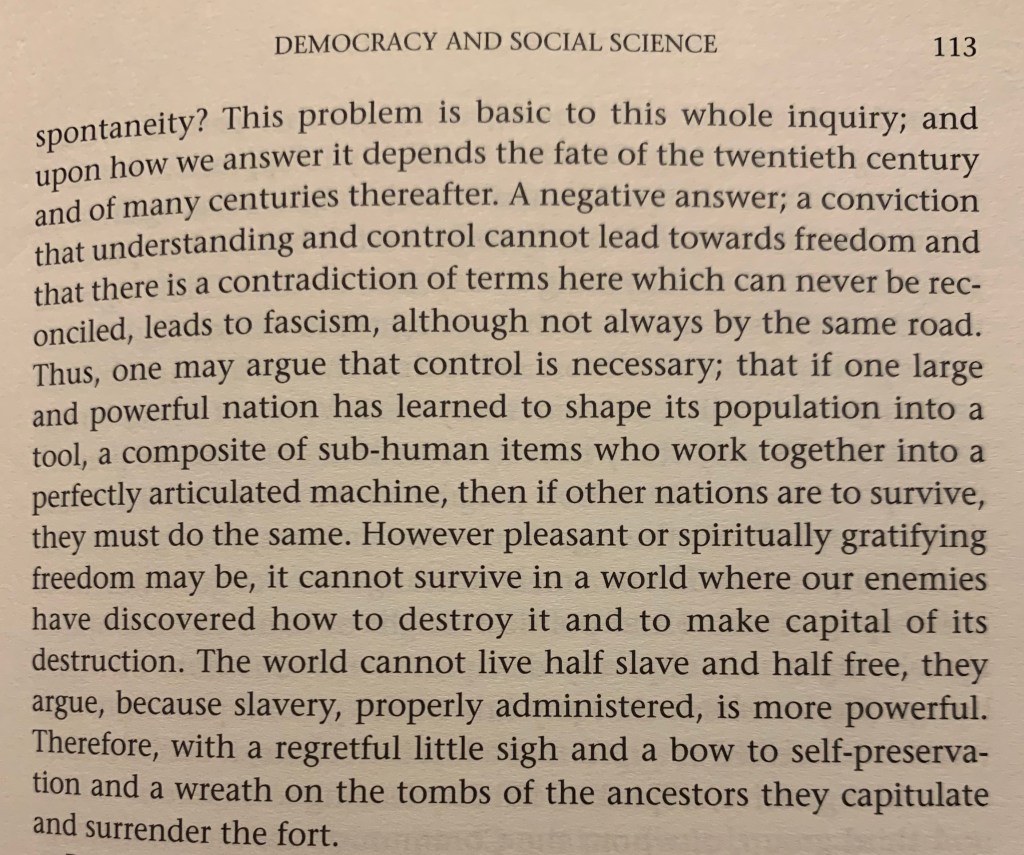
(Berghahn Books 2000)
I feel like I could chew on that all day and still not quite understand what she is saying here. This is what I’m reading… if you are convinced that the understanding and control science allows inevitably leads to a loss of freedom when applied to people, you will find your way to fascism one way or another.
In characteristic form, Mead explains her point with care. If you believe fascism is the obvious end of scientific control, so you reject science in an effort to save yourself, you end up there anyway.
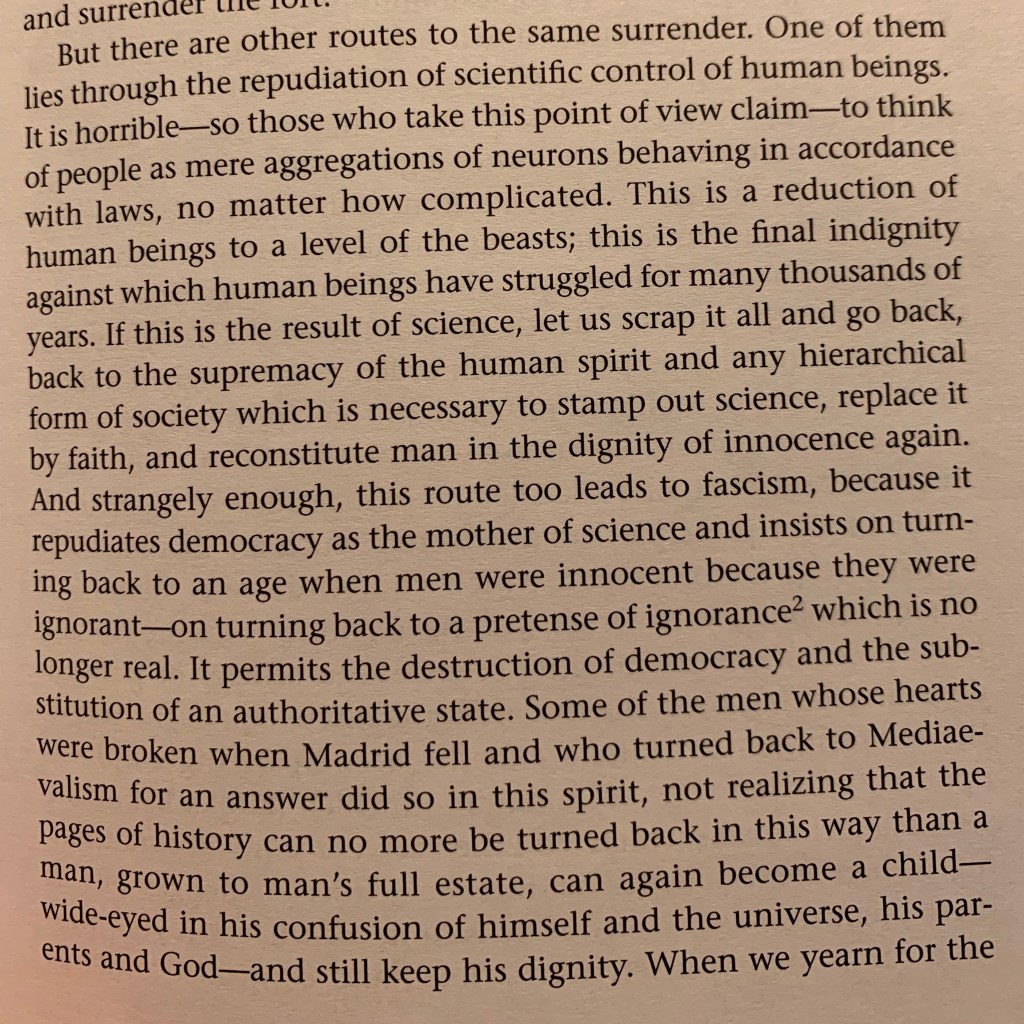
(Berghahn Books 2000)
She reminds her readers that time is always marching forward. An attempt to go back and pretend you don’t know what you know is a fool’s game.
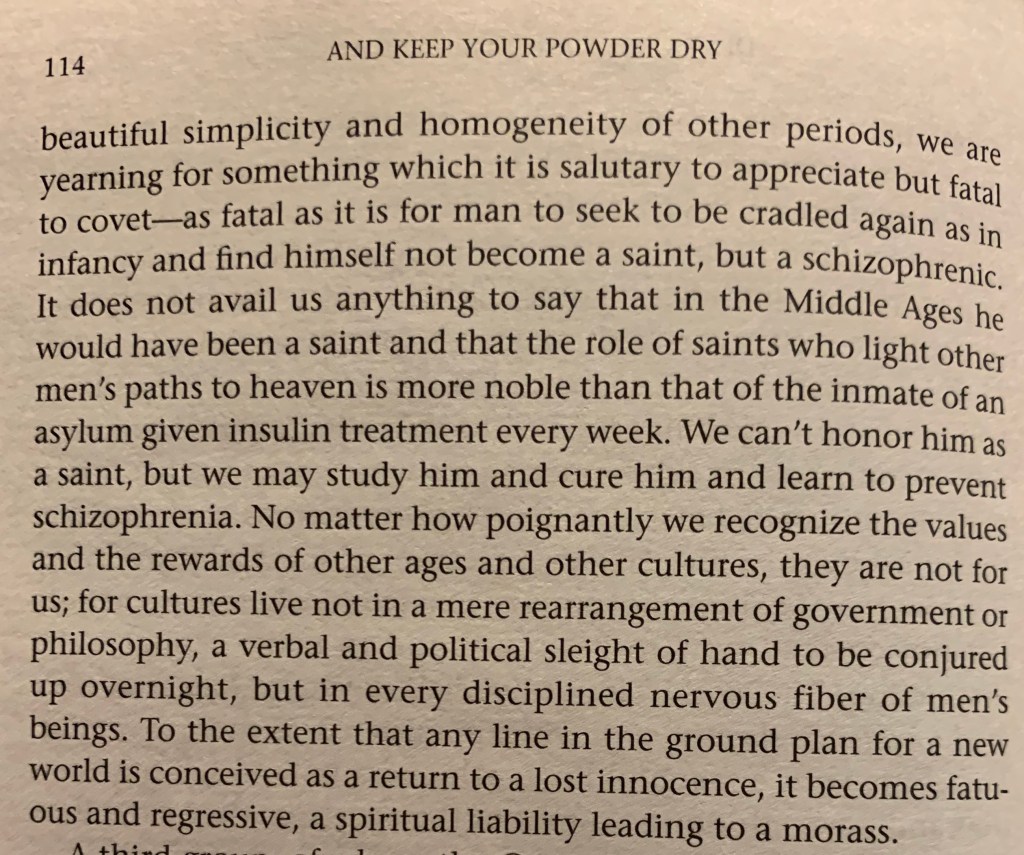
(Berghahn Books 2000)
Finally, she addresses those on the Left. She says that when attempting to use science to ensure all people are sheltered and fed, the purpose may be noble, but the order will have to be forced to be maintained over the long term.
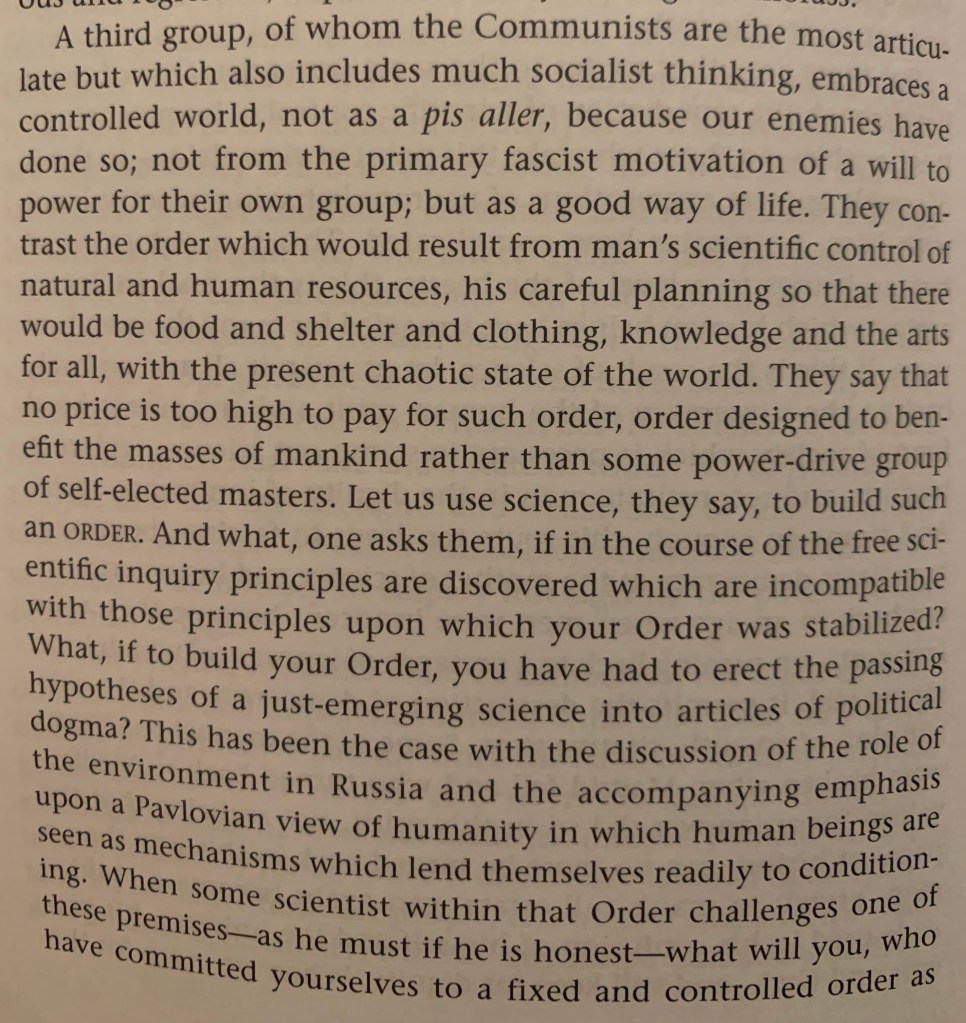
(Berghahn Books 2000)
Order at the cost of freedom is antithetical to who we are. That’s how I read it. Do you?
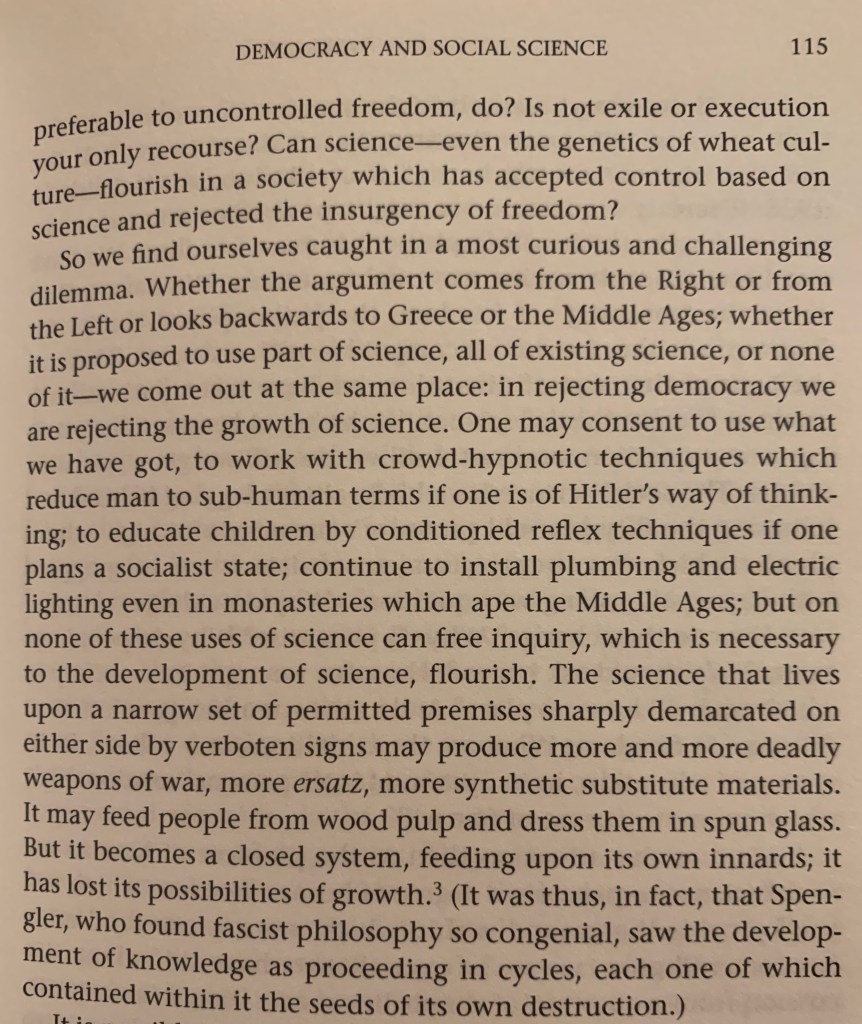
(Berghahn Books 2000)
There is a lot to unpack here, but I think the crux of what she is saying, and the part we can all agree on, is this: both science and democracy require free thought. Once you set the boundaries and determine that you can’t step outside of them, you are at a dead end for both democracy and science.
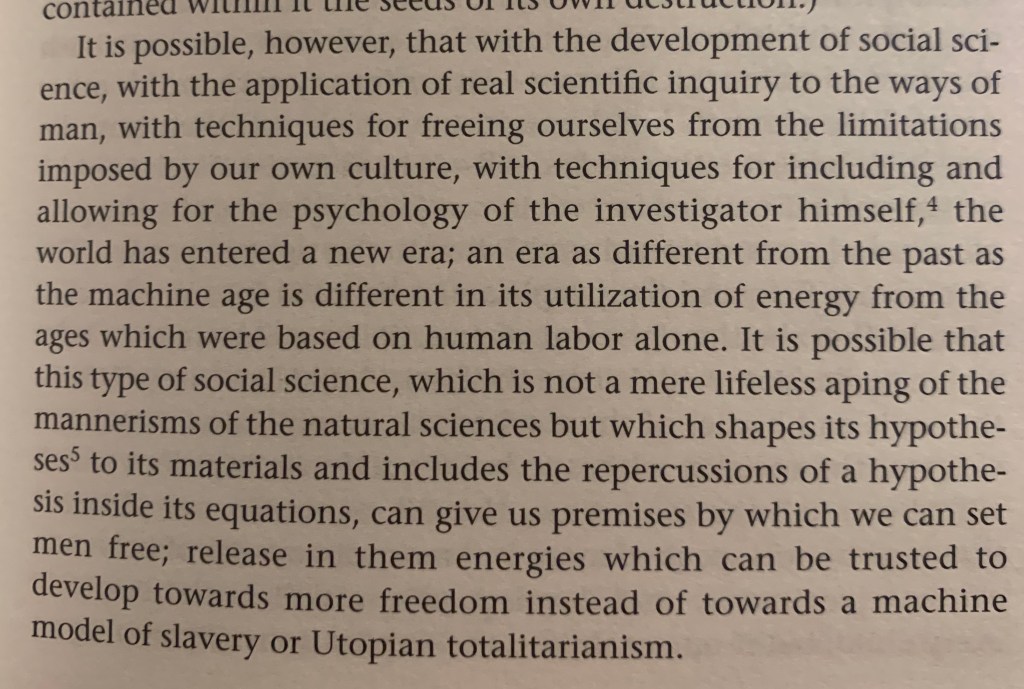
She wraps this up by making the case that you stay on the right path when you understand that your hypotheses are never set in stone, nor should they be. America demands progress, and that means the ability to use scientific understanding to move on and up to a better understanding. In terms of social science, that means we can never believe our understanding of cultures and political systems can’t be challenged. We must understand that we do not know definitively how things are supposed to be, so we do not try to force people to be that.
So, back to the question: Mustn’t this road of assessing people scientifically and using their strengths as tools lead to fascism?
The answer: no, it does not have to. If you believe it must, it will, though, so don’t do down that road. Don’t go down the road of rejecting science either, because we can’t un-know what we know. If you want to use science responsibly, always remember that someone is allowed to prove your hypotheses wrong.
Mead understands that. Just as I do not share her writing as the definitive explanation of the character of America, she did not share it as such. She was saying something more like, “this is what social scientists know now through our observations and careful research. This is what is says about our way forward.”
 Recommended Reading for American Voters