
And Keep Your Powder Dry by Margaret Mead was written with a clear purpose, to win the war with a clear enemy, the Nazis. At the end of Chapter X, she attempts to take all she has taught about American culture and family and our puritan roots to make the case that truth-telling is the thing that could and should separate us from the Nazis.
She knows pushback is coming.
(Berghahn Books 2000)
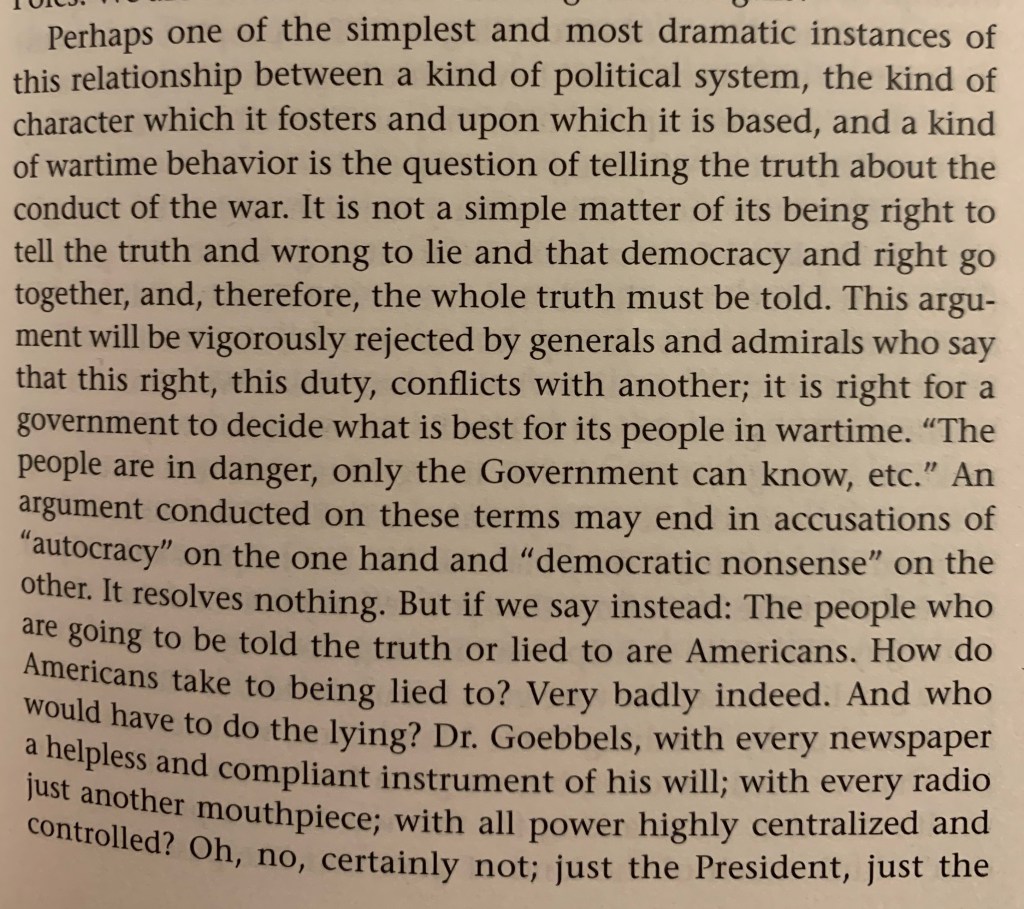
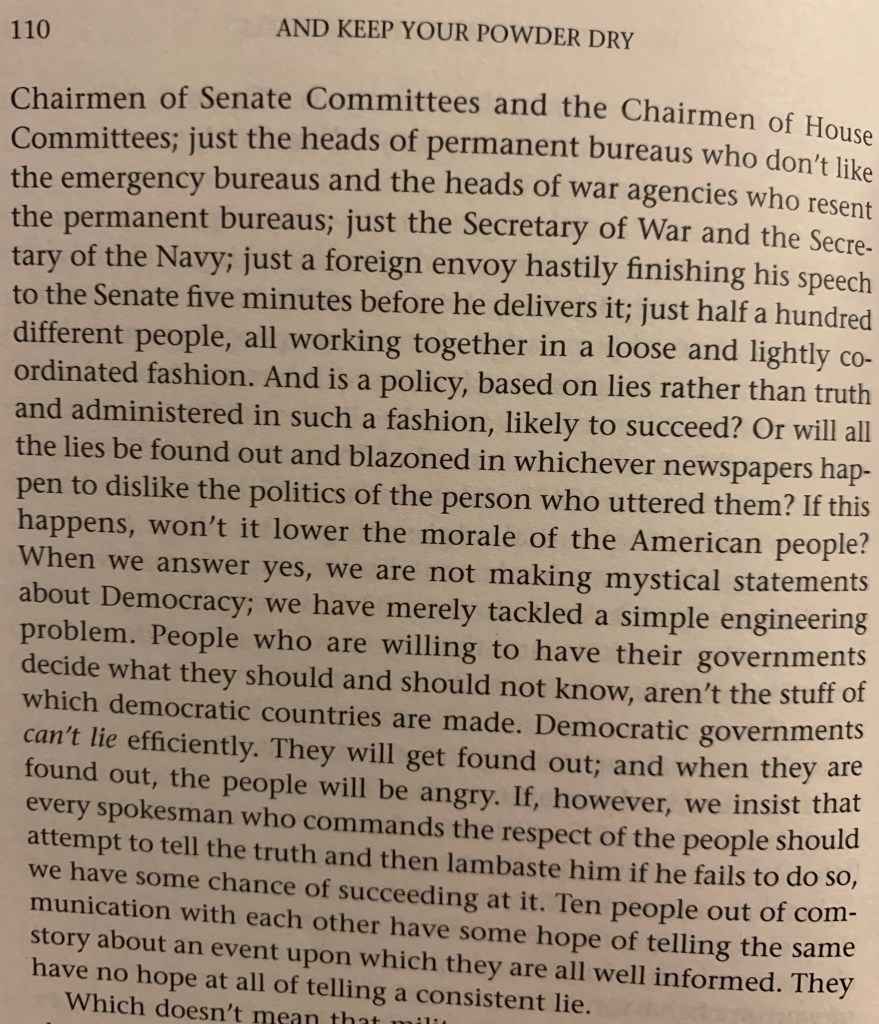
She asserts that democracy and truth-telling go together, because democracy, particularly the American brand, needs to believe there is a right way forward. In a previous blog, we read as she carefully built the case that we, individually and collectively, should be striving to always do right, punishing ourselves when we fail, and then working to do better. As I understand it, she is arguing that that work is fundamental to who we are as a people. Now, she extends that to the practices of the government, and what it means for how our leaders should conduct themselves in wartime. She comes to the conclusion that telling the truth, as quickly as possible, is most in line with the American character, as built from the family up.
(Berghahn Books 2000)
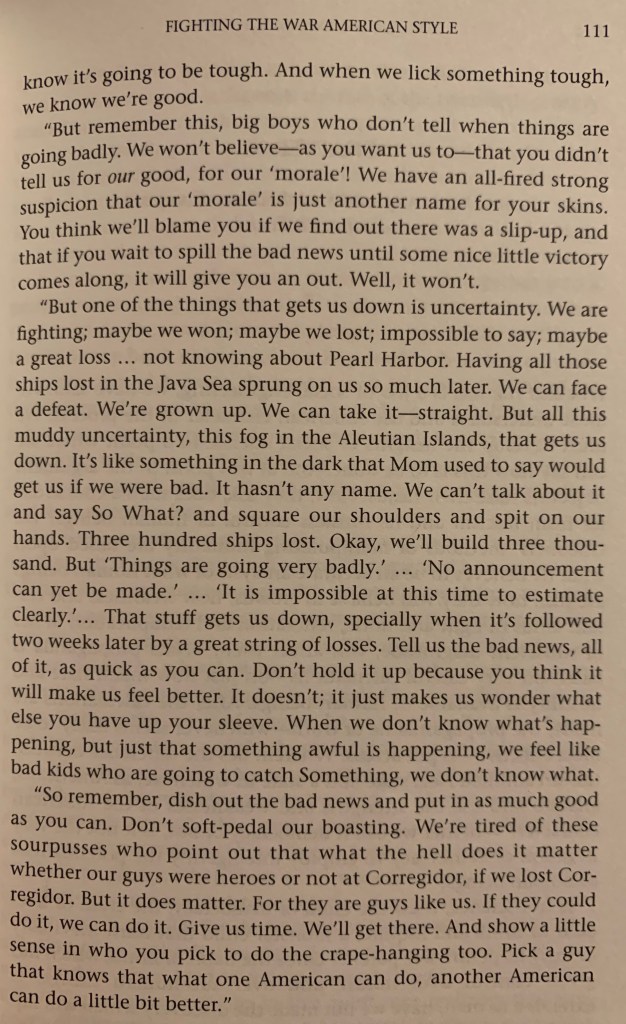
Mead believes strongly that Americans do not take kindly to lies.
(Berghahn Books 2000)
Here, she calls out the leaders of her time, and tells them that not being straight with Americans, even in wartime, was the mistake they kept making. She says that waiting to tell bad news just “…makes us wonder what else you have up your sleeve” (2000). It’s a plea to our leaders in Washington to trust the average American enough to be honest with all of us about what our nation faced.
Mead ends the chapter by reminding us that if our parents or we do not measure up, there is some other American who can.
 Recommended Reading for American Voters