
As we continue Chapter X, “Fighting the War American Style,” we will pick up right where we left off in the last blog. There, we read Margaret Mead’s explanation of the importance of moral purpose and moral conceptualizing for Americans. Here, she puts it in a way they might feel more familiar: we “need to believe that we are right” (2000).
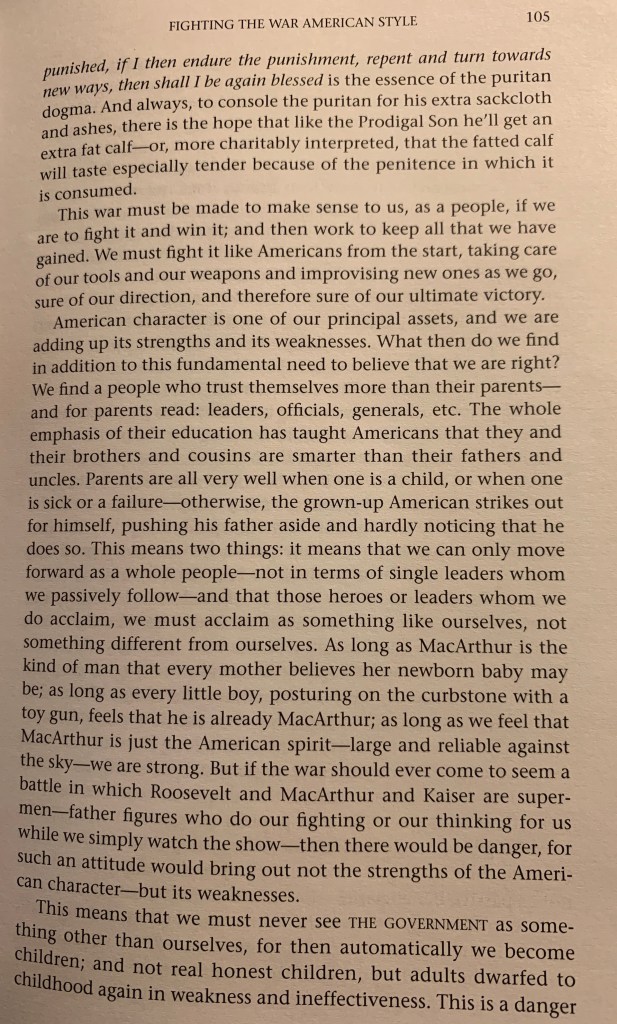
(Berghahn Books 2000)
She goes on to say that another characteristic is that we trust ourselves more than our parents, and this can be translated into trusting ourselves more than our leaders. We need to feel like our Generals aren’t above ourselves, but that they are ourselves.
She then warns against seeing our leaders as father figures. She insists that we cannot let our leaders “…do our thinking for us while we simply watch the show” (2000). She asserts that plays to our weaknesses.
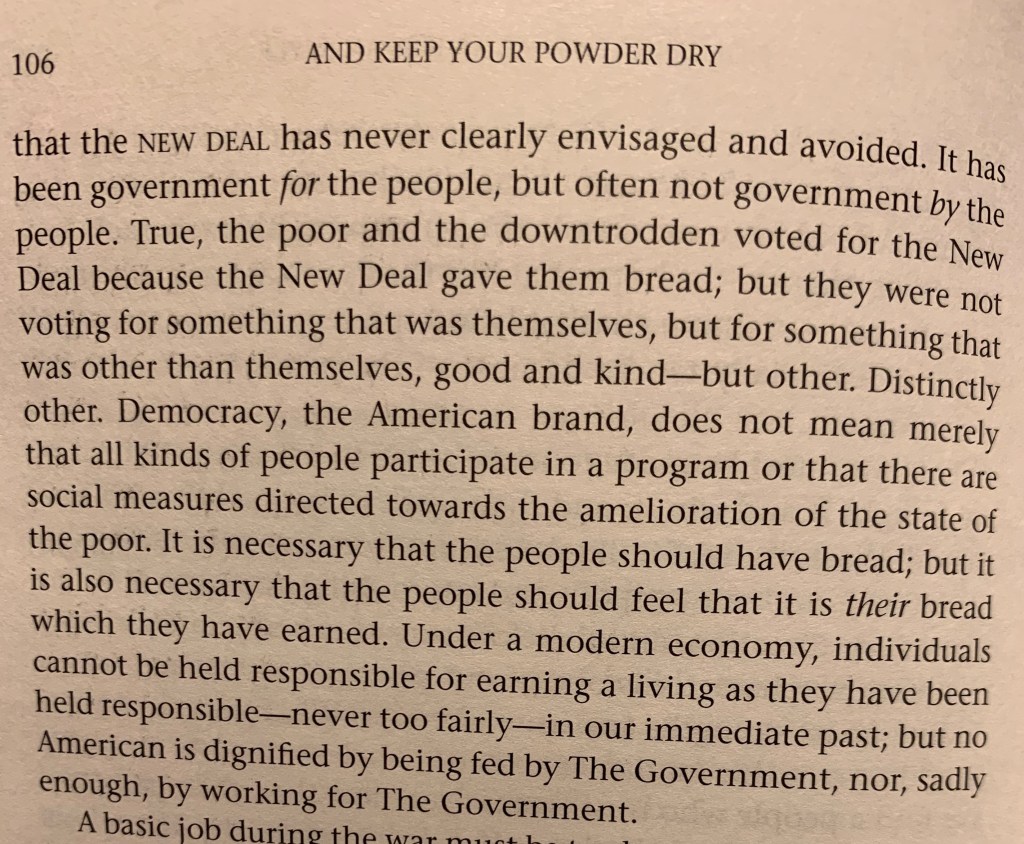
(Berghahn Books 2000)
And, this takes her back to slamming the New Deal, and she again captures the the push-pull of American values.
Democracy, the American brand, does not mean merely that all kinds of people participate in a program or that there are social measures directed towards the amelioration of the state of the poor…
(Berghahn Books 2000)
So, it does mean that there should be measures to alleviate poverty. That is just not all it means, in a way that made the New Deal dangerous in her estimation. The American brand means you earn your bread, and not from the government (because the government is the parent, remember, and adult Americans move on from their parents). She presents these ideas so clearly as part of the same character structure that I thought she might be surprised how polarized those values are in American politics today, when they are not often seen as two integral parts of a whole, but as mutually exclusive ideas with each side needing to believe they are right.
Then, she says this…
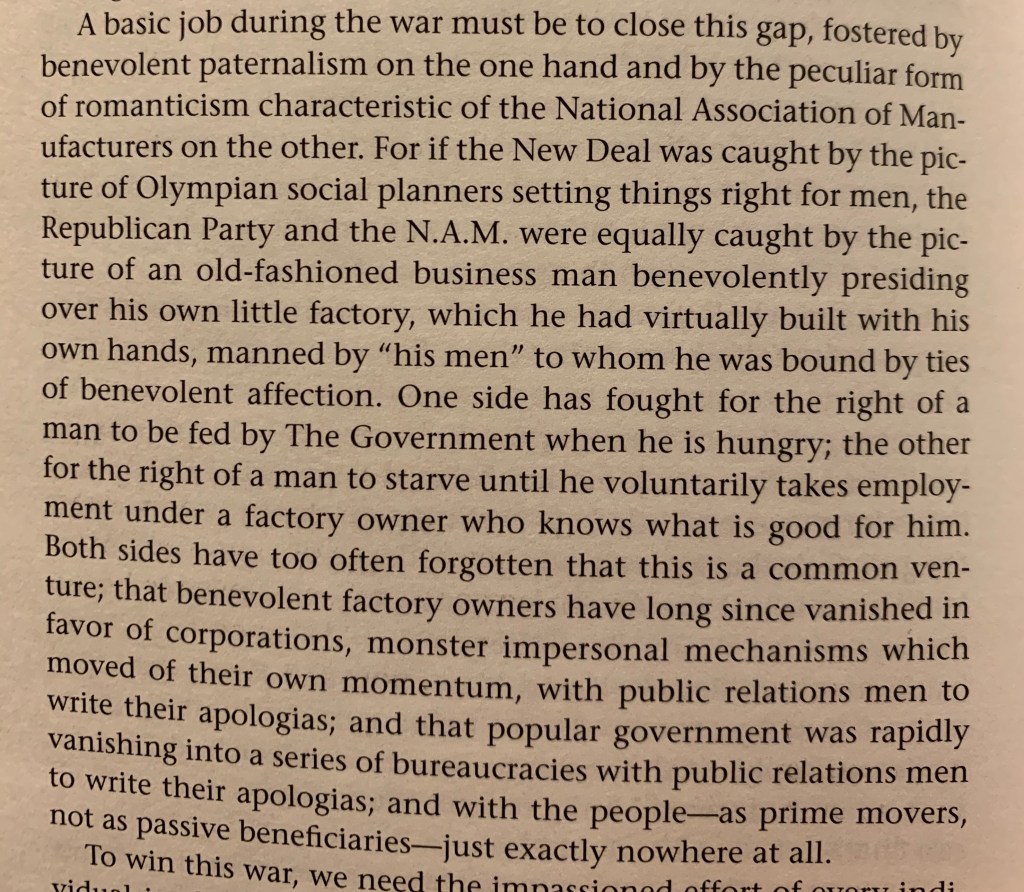
Both sides have too often forgotten that this is a common venture; that benevolent factory owners have long since vanished in favor of corporations…with public relations men to write their apologias; and that popular government was rapidly vanishing into a series of bureaucracies with public relations men to write their apologias; and with the people—as prime movers, not as passive beneficiaries—just exactly nowhere at all.
(Berghahn Books 2000)
And, we see that she understands today’s America very well.
 Recommended Reading for American Voters