
(Berghahn Books 2000)
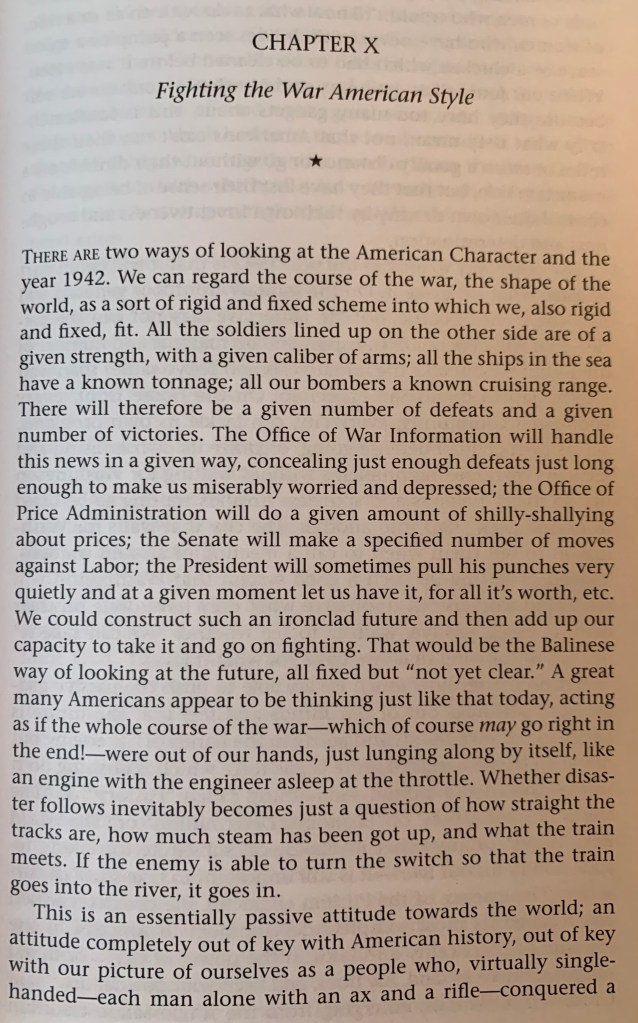
I have had this feeling that Americans are sleep walking, and I know many of my friends have, too. I used to think of Kurt Vonnegut’s Timequake when that feeling overtook me, and imagine accidents happening around me as everyone awakened at the same moment. Now, I think of Mead’s And Keep Your Powder Dry, and wonder what Americans will come up with next and which Americans it might be.
(Berghahn Books 2000)
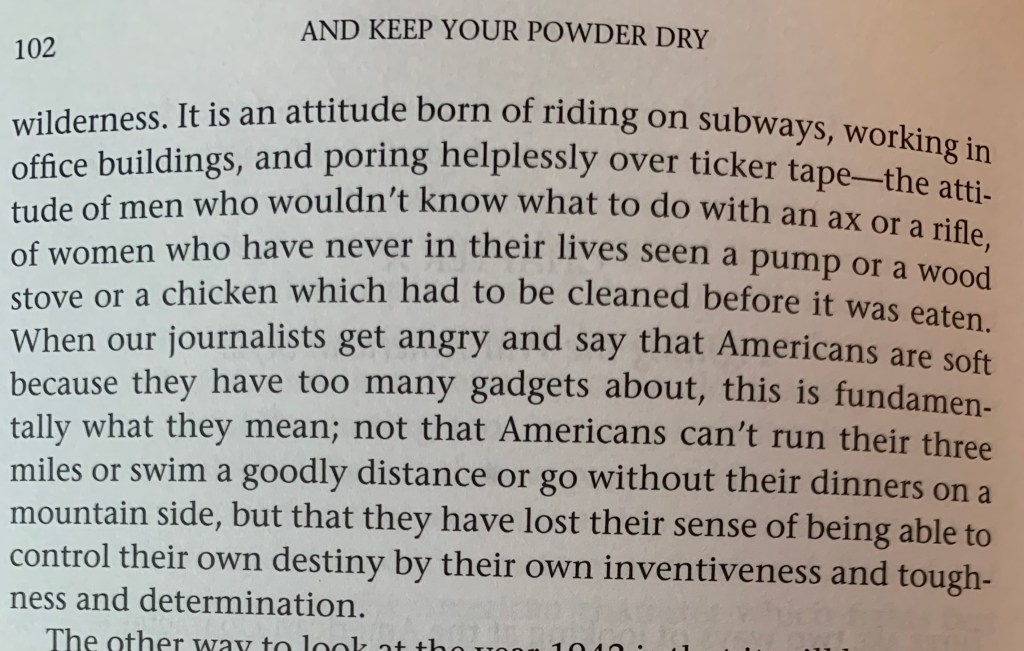
Margaret Mead wrote this before every home had a washing machine and television. The gadgets that worry the pundits now would blow her mind. Still, she mentions gadgets!
In Chapter X, “Fighting the War American Style,” Mead takes the ideas she’s been developing throughout And Keep Your Powder Dry, and attempts to explain that an understanding of the American Character allows us to accurately assess our strengths and weaknesses, which were (and are) not the strengths and weaknesses of our enemies or our allies. She is talking about America, an undeniable nation of immigrants, to Americans, with a deliberate purpose in mind.
(Berghahn Books 2000)
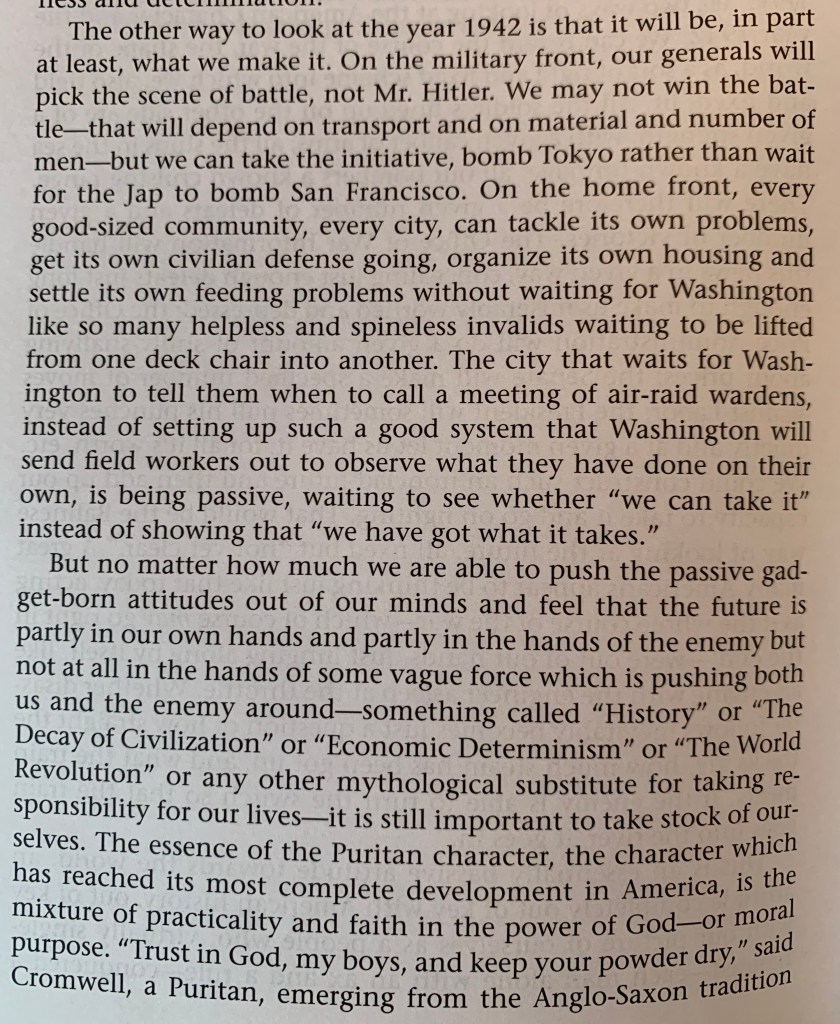
There is lot that can make modern Americans uncomfortable here, but I ask you to sit with that uncomfortable feeling and keep reading. Here, she builds the idea that it is more characteristic of Americans to build something and make Washington learn from you than to wait for Washington to bring you the goods. It might not seem that way when we are always asking presidential candidates to bring jobs to town, but it does feel true when we see how businesses and nonprofits have responded in our current crisis: making decisions to protect their workforce, distributing food and toilet paper in unusual ways, and manufacturing sanitizer instead of beer.
Americans move on, and hopefully up. They don’t wait to be told and have the good life brought to them. It can feel surreal or naive to consider this perspective now, when we are at a literal standstill, but Mead understands hard times and speaks to about control and lack of it, too.
Again, I remind you that Mead forewarned us that a discussion of America would sound like a Sunday School lesson (quote is on blog home page if you missed it). This is a prime example. For me, the takeaway here is that when we surrender to that side of ourselves that feels like we are powerless, we are failing a very important part of ourselves that needs to believe our hard work and determination can move mountains. We need to believe that we have control. That is when we are strong. So, what does that mean in time when we don’t have control?
(Berghahn Books 2000)
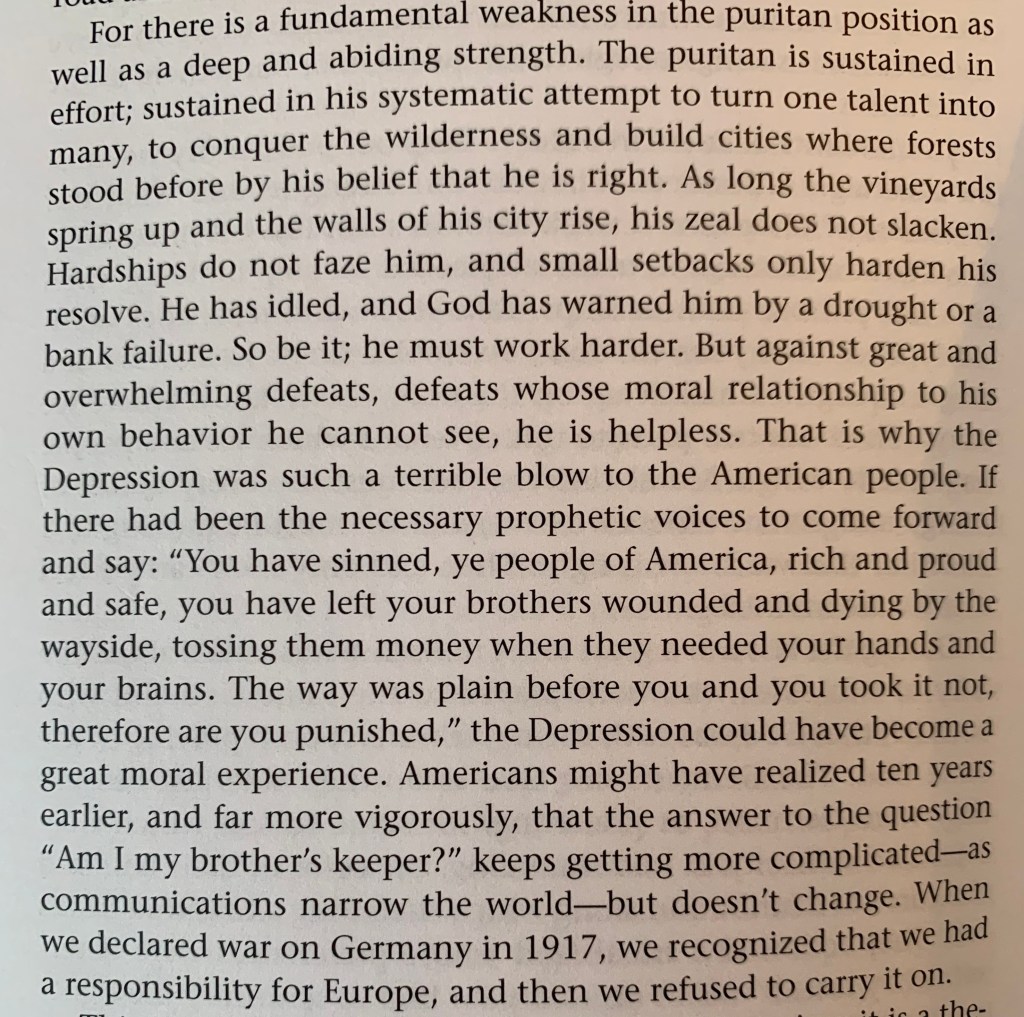
I interpret this is as Mead saying Americans believe that our success and progress is a result of our effort, and our failures are a signal that we must do better. Some things, like the Great Depression, really undo that, because our personal trials have got exactly nothing to do with our personal efforts. She is saying, as I read it, that when that happens, we need to see it as a national failure and the nation needs to do better—that even if it’s not true that what is hurting us is our punishment for doing some wrong, we still need the moral experience of taking responsibility for it to move on.
I think this will make many readers uncomfortable, but I think part of the reason is because the voices that still espouse this idea in such religious terms today are guys like Pat Robertson, who want to blame hurricanes for gay people. We’ve heard these voices blaming Jews for coronavirus. Those aren’t the only voices, though, that still couch our failures and trials is such strongly moral, often religious, terms. We can still see how this aspect of the American character plays out in American politics today. We can see a direct religious appeal from those who believe that abortion is an obvious moral failing that is wreaking havoc on our national character and causing bad things to happen. We see another type of religious appeal from many African-American leaders who pose the very question directly, “Am I my brother’s keeper?” We see a moral appeal among environmentalists, who see pollution and consumption as obvious failings that are having direct consequences on our planet today, consequences that we’ve historically called “acts of God.”
In short, the moral browbeating we give each other that makes us so insufferable to one another is an important, fundamental part of who we are.
The trick is getting on the same page.
We’ve got time now to do that.
 Recommended Reading for American Voters