
“The Chip in the Shoulder” is Chapter IX of And Keep Your Powder Dry by Margaret Mead. This chapter is where Mead begins to turn her attention to World War II. That is not why it proves to be one of the saddest to me. It is because I am not sure she’d even recognize us anymore when she talks about aggression. At the same time, there are moments when we are still very recognizable.
Because she is shifting her attention to the shining cause of her time, keep these facts close to the surface:
- World War II was our national priority.
- Great Britain was our closest ally.
- Germany was our greatest enemy.
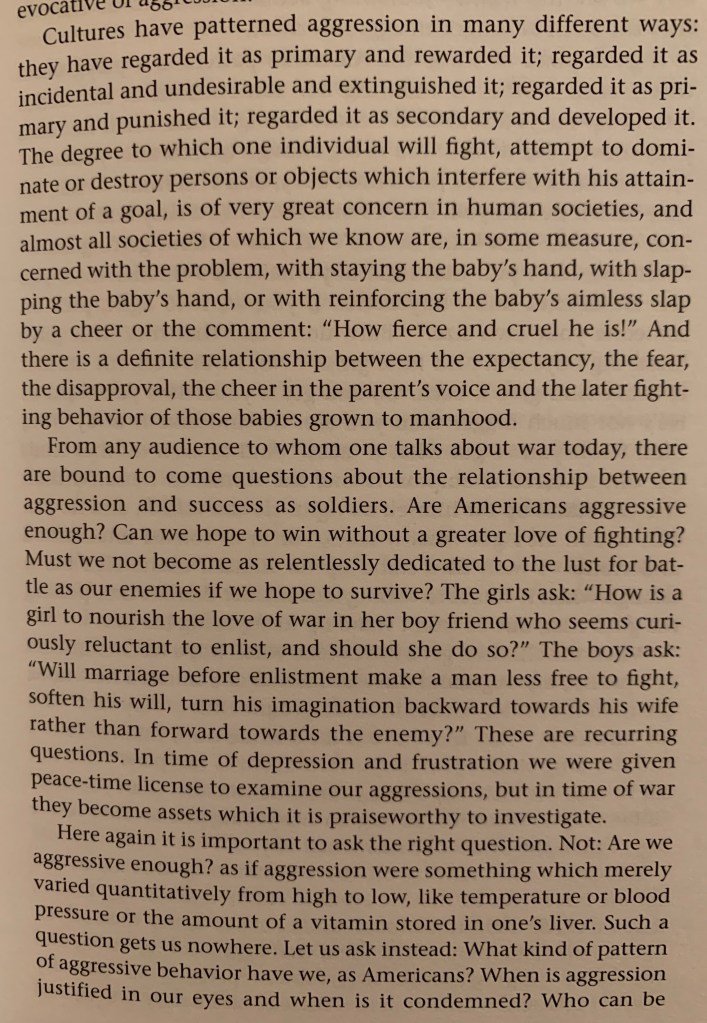
(Berghahn Books 2000)
Today, the question is never whether Americans are aggressive enough. Our concern is that Americans are committing violence that is not justified and that they know will be condemned. As she talks about American boys on playgrounds, I cannot even imagine how news of school shootings would shake her.
One question I will pose is this: was America different or did she only see it that way?
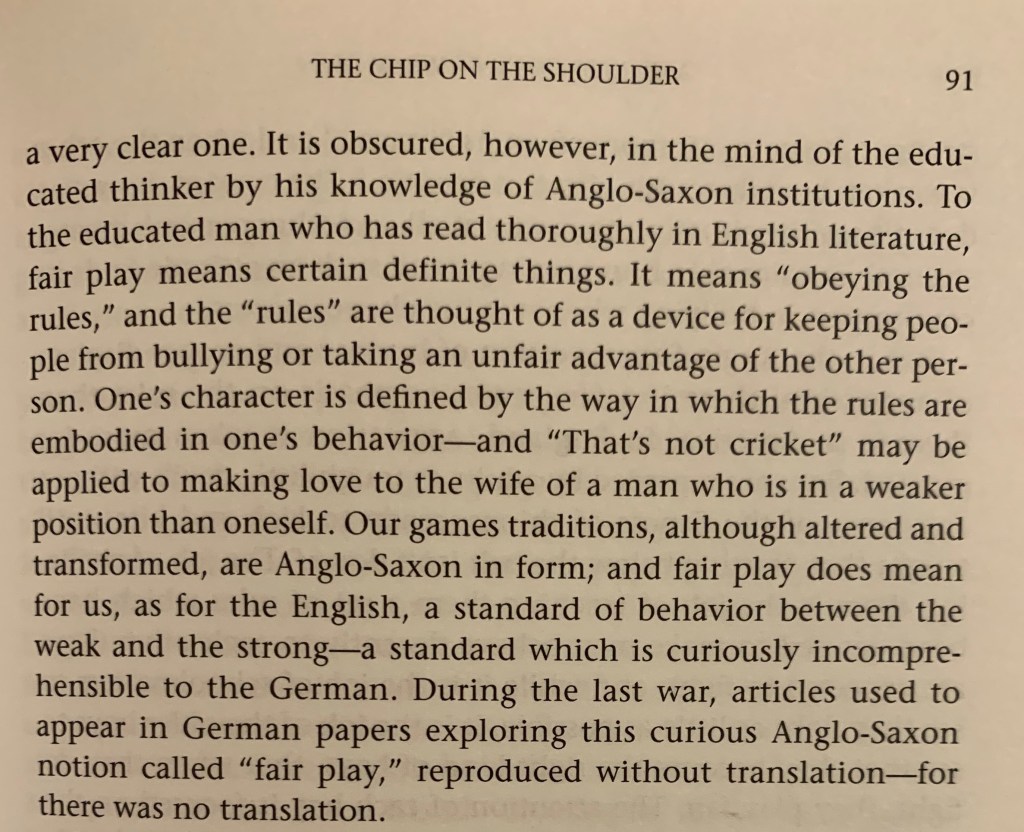
(Berghahn Books 2000)
I find it absolutely intriguing that articles in German papers during WWI had no translation for “fair play.” This passage largely leaves me curious how it would be perceived by modern Germans.
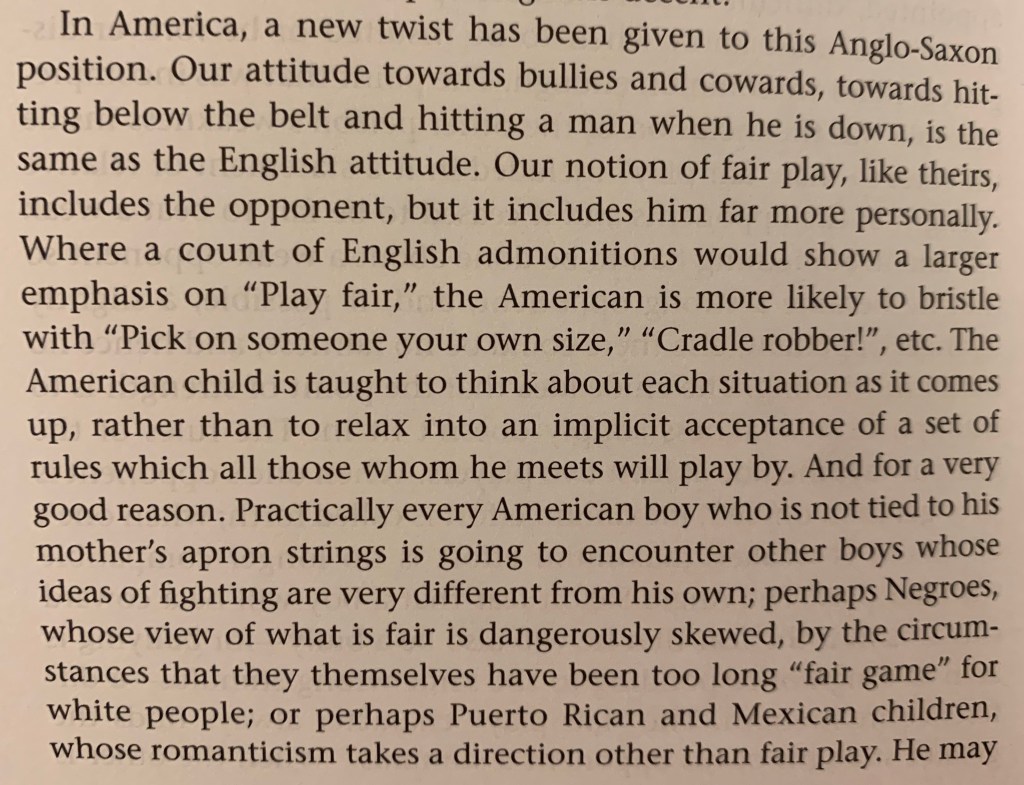
(Berghahn Books 2000)
I wonder again: are we far from where we were, or did Mead miss the severity of the exception she saw to fair play? She espouses the idea that Americans don’t fight until they are pushed to fight, despite the lynchings happening around her. She has the knowledge and wherewithal to acknowledge that black people were fair game for white people and that had dangerous ramifications, but there was not yet the realization that the whole time that white Americans were giving white Americans permission to see black Americans as fair game, they were giving Americans permission to see Americans as fair game.
What happened when racial violence became unacceptable and condemned, but the violence was still entrenched? Americans were taught that certain Americans were fair game for aggression, but then, in a matter of generations, that fair game was deliberately taken from them. Does that mean no one is fair game?
Or, everyone is fair game?
 Recommended Reading for American Voters