
The remainder of Chapter VIII of And Keep Your Powder Dry is absolutely fascinating. Margaret Mead discusses the formation of the conscience, the American experience of adolescence, and how they form America’s drive toward Progress.
I am skipping her discussion of conscience-development for a couple of reasons. As intriguing as it is, I am not sure how an anthropologist’s explanation in 1942 compares to the understanding of modern day social scientists and psychologists, and I feel like her descriptions of child-rearing in other cultures could prove not only inaccurate by modern understanding, but plain offensive. That said, you should definitely get the book just to read it!
Here, we are going to trust the veracity of her claims as understood in 1942, and then turn our attention to American adolescence. Before we dive-in, though, I want to bring your attention to the quote that I put on the homepage of this blog. The further along the book goes, the more relevant it becomes. Please, keep these words of hers in mind:
“…when I talk about what Americans must do if they are to use the full resources of their character structure, I will be making highly technical statements, and they will often sound exactly like a Sunday-school lesson.”
(Berghahn Books 2000)
Remember, this is a puritanical country. Our culture couches things in moral terms. Now, buckle up—we are going to talk about the American teenager!
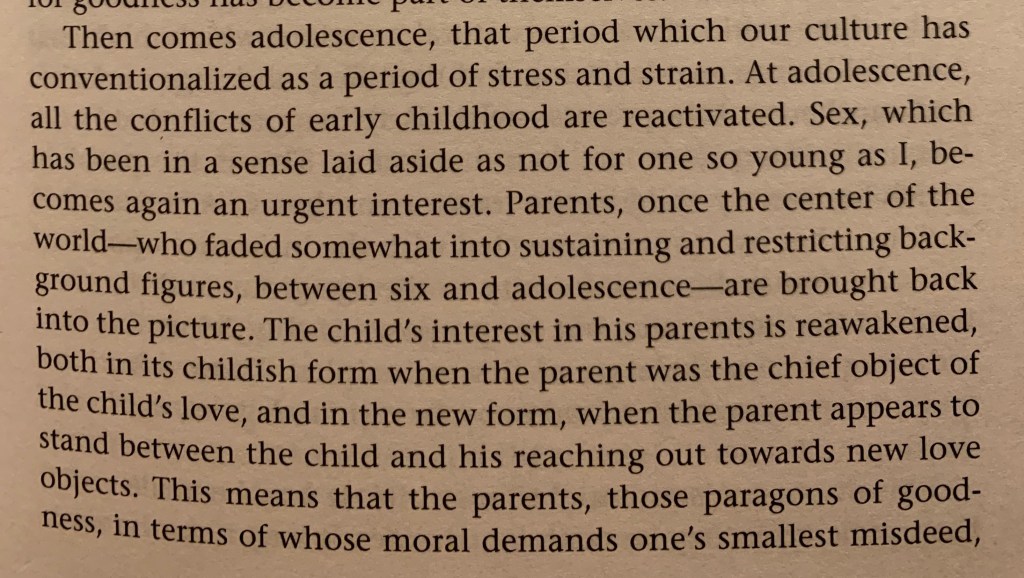
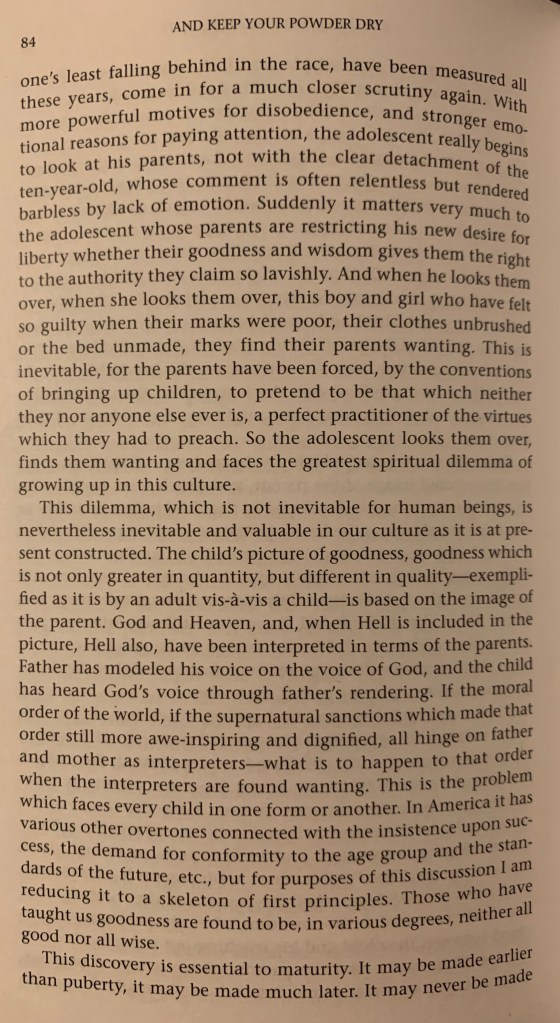
First, let me tell you as a present-day parent of two American teenagers that the stress and strain she describes is still very much a part of our experience, even for non-religious households.
(Berghahn Books 2000)
How many parents of American teenagers do you think can relate to having a teen question whether or not they even have the right to tell them what to do?
All of them.
The answer is that all parents have been found wanting. This is still very much how things go in American adolescence.
(Berghahn Books 2000)
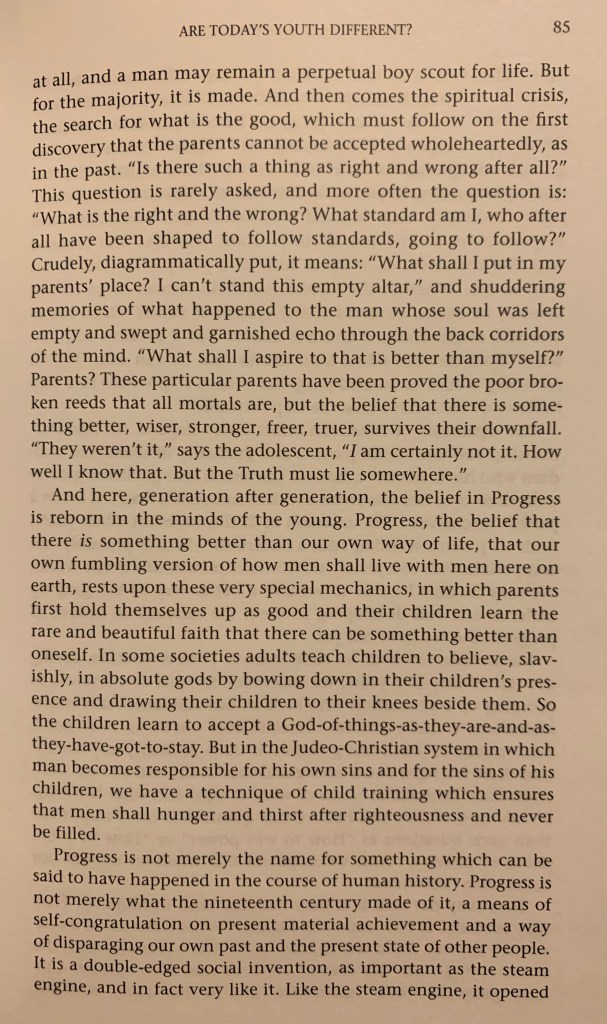
I hope it brings some small comfort to parents to know that this does serve some patriotic purpose!
It might be making readers uncomfortable that she is explicitly lauding Judeo-Christian ethics for raising up people committed to progress and always doing better, or that might be completely evident to you. Either way, she warned us it would be like Sunday School up in here. Please, keep reading.
(Berghahn Books 2000)
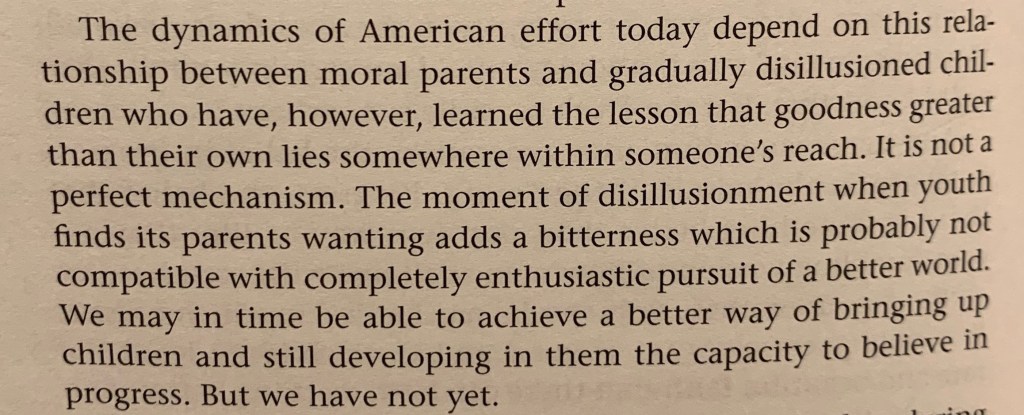
As I was saying, this is still the way we do it. Eighty years on and less religion in our homes generally, and still, we do it this way.
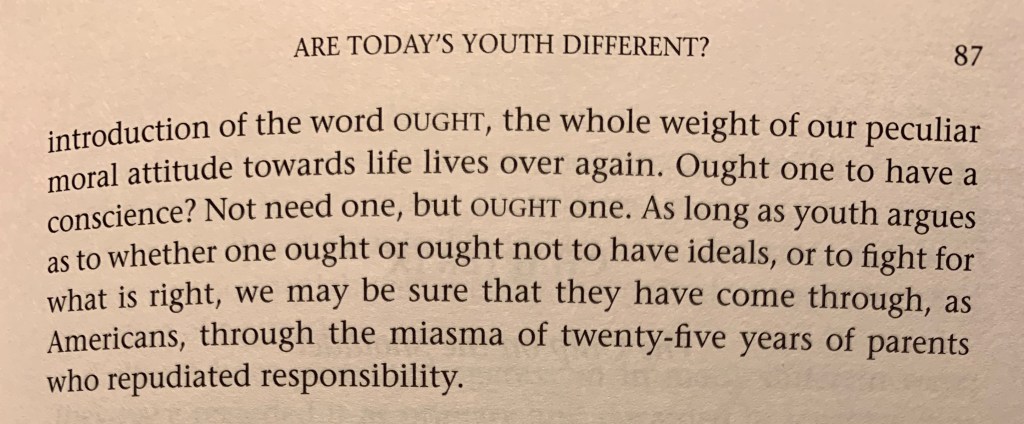
(Berghahn Books 2000)
And, these are the kids we have.
American teenagers, for all their cynicism and existential dread, still are talking about what we should be doing. Even with their long reputation of not caring much, young Americans still protest, march, and rant that their elders can and, more importantly, should do better.
Mead makes me believe that this our hope, always.
 Recommended Reading for American Voters