
Even before our current crisis, a friend of mine, who is a professional historian, reminded a room full of people that we have been through hard times before. He then spoke of the era that Margaret Mead describes in Chapter VIII of And Keep Your Powder Dry. She describes that time as a betrayal of our values by an entire generation.
“Are Today’s Youth Different?” is the chapter’s title. In it, Mead first takes aim at the parents of the young adults of the time. Those young adults would come to be known as The Greatest Generation. Now, we take aim at their children with “ok, Boomer” much the way their parents were targets in ‘42.
(Berghahn Books 2000)
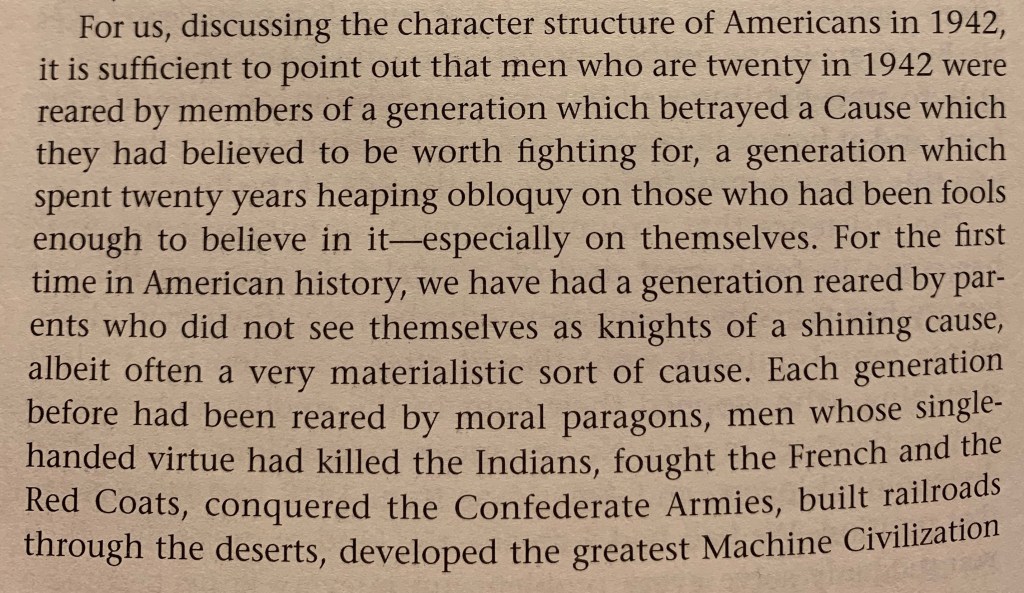
We are reminded that American Exceptionalism was alive and well in Mead’s time when reading the words “…whose single-handed virtue has killed the Indians…” (2000). It is one of those statements likely to make many modern Americans cringe. What does this mean for us now, when the destruction of indigenous cultures and peoples is recognized as genocide? Ask yourself that question, but stick with her.
(Berghahn Books 2000)
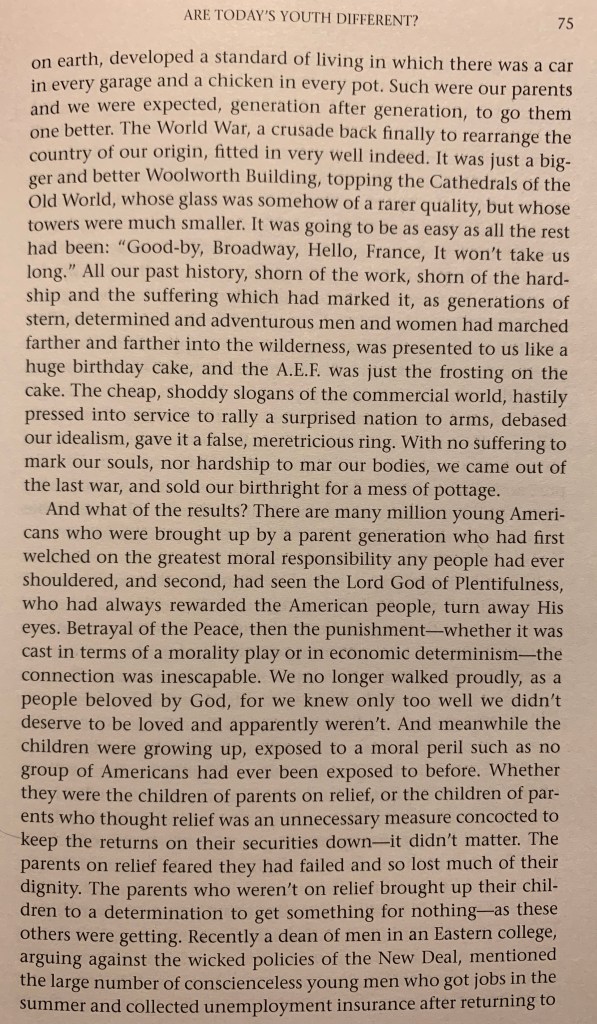
The framing of the betrayal in terms of favor and punishment from God might seem out-of-date now. This sentiment, that our fathers put money first and squandered the future of their children, though, feels fresh. Aren’t our children, who prepare for shootings perpetrated by classmates at school and who have a computer with access to free porn at home, “exposed to a moral peril such as no group of Americans has ever been exposed to before,” (2000) too? The specific anxieties are different, but the worry is the same today as yesterday: we aren’t prepared for this. These kids aren’t prepared for this.
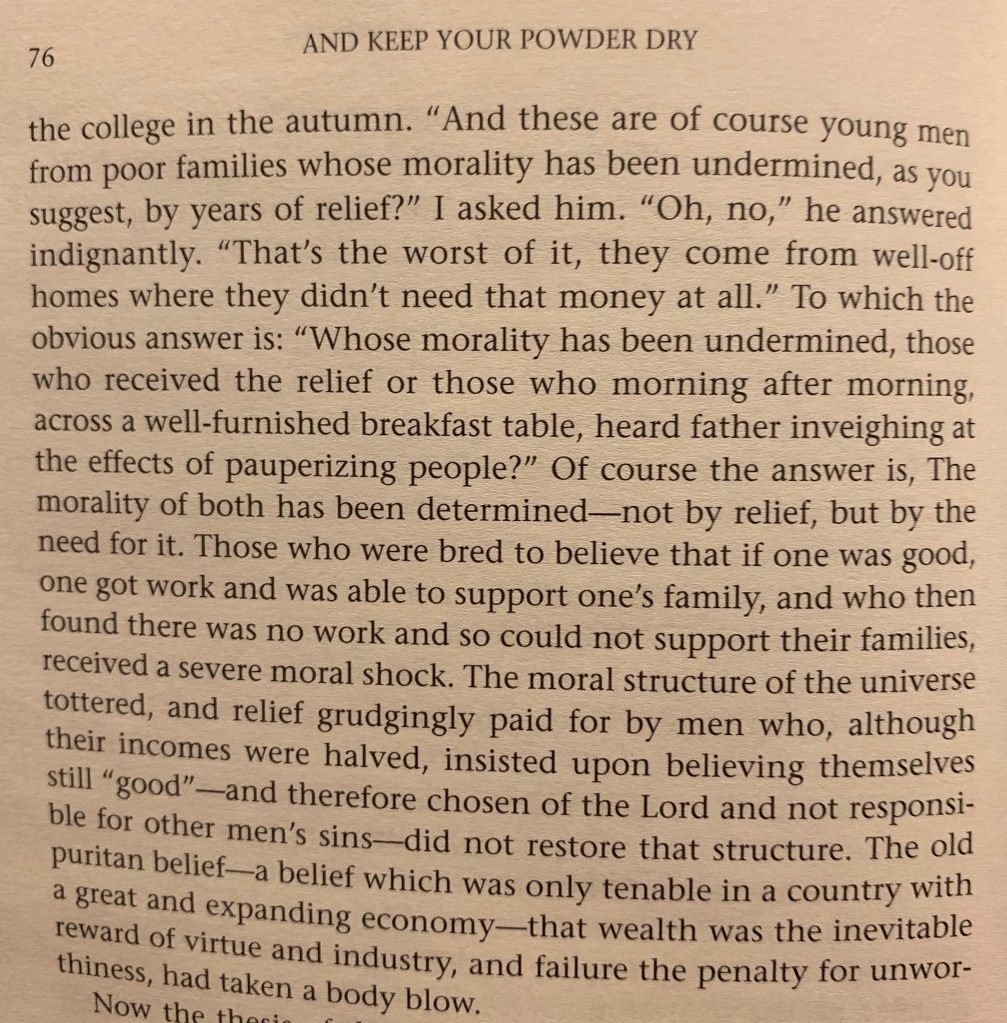
Mead wasn’t considered a conservative as far as I can tell, but calling the New Deal wicked is the sort of description likely to make conservative readers smile and liberal readers scoff. Her description of relief/aid makes it clear that she sees it as contrary to good character. That’s not the whole story of the need for relief, though, and she understands that. One thing I really admire about Mead is how seamlessly she moves from a scathing criticism to obvious understanding of the other side, like in this next passage.
(Berghahn Books 2000)
Mead explains how our aversion to relief comes from our puritanical roots. She blames a generation of Americans for losing God’s favor and lambastes the country for even needing relief programs, but then she easily acknowledges that “wealth was the inevitable reward of virtue” (2000) doesn’t really hold water in a financial collapse (or, say, a quarantine).
This does not come across as hypocrisy. She simply displays a keen awareness that, sometimes, a thing lends itself to the opposite thing. Our modern dialogue would benefit from that kind of nuance and clear-eyed look at the country and its people.
(Berghahn Books 2000)
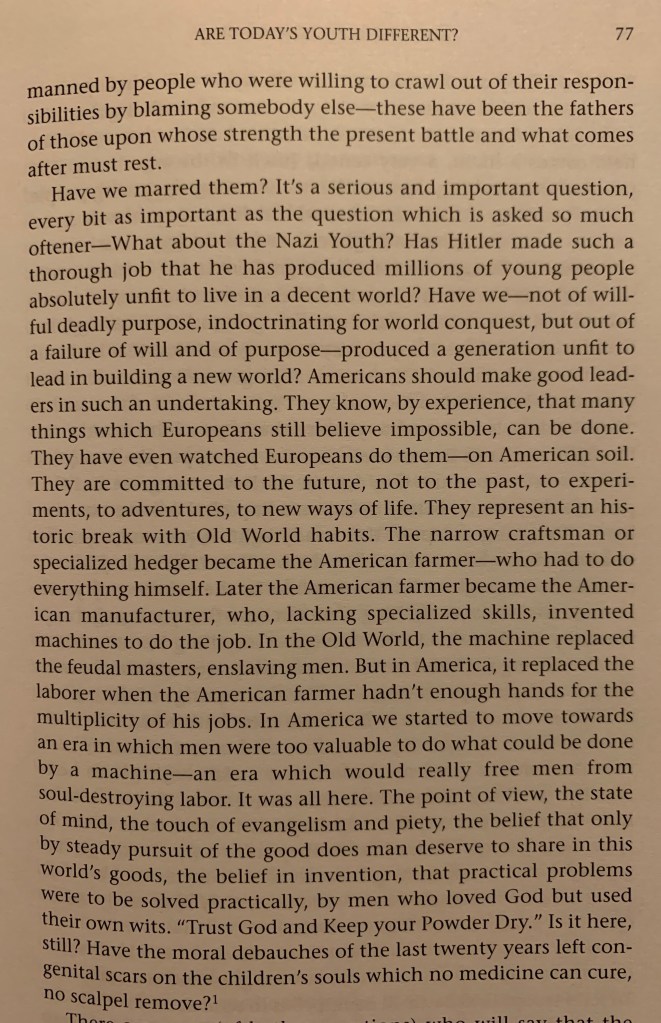
After she demands America wrestle with its mistakes, she asks her readers if their failure of will and purpose could produce a generation of Americans unfit to build a new world, when building new worlds is supposed to be what Americans are uniquely fit to do. Did we already cause so much damage that American kids these days aren’t ready for the future?
She was expressing that anxiety about The Greatest Generation.
Mead and her fellow Americans had the fortune of being certain in their way forward: beat the Nazis. By 1942 (though just years after a Nazi gathering in Madison Square Garden), Americans were unified around that cause. They shared a common cause in the defeat of fascism.
Our shining cause isn’t so clear, though it feels more obvious now than it did about four weeks ago. We’ve definitely learned a lot about preparation, and keeping our powder dry!
What have we learned, though, about leading in the future?
And, are these kids prepared for that?
 Recommended Reading for American Voters