
In And Keep Your Powder Dry, Margaret Mead slowly shifts her attention from American parents to good, ole American sibling rivalry in Chapter VII, “Brothers and Sisters and Success.” I’ve been looking forward to sharing this one with you!
The relevance of these words feels crazy in a world of avocado toast and standardized testing.
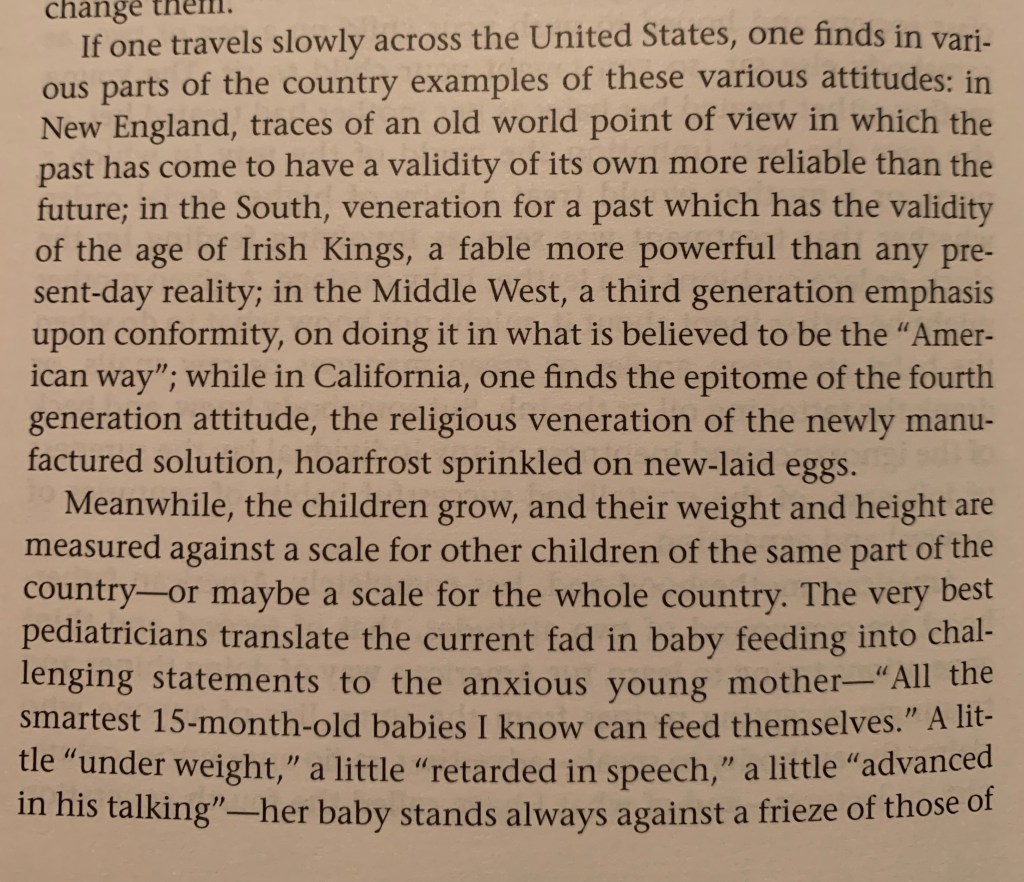
(Berghahn Books 2000)
“Breast is best.” “Fed is best.” “95th percentile.” I don’t think you’d find a modern pediatrician talking about the “smartest 15-month-old babies they know,” (2000) thank goodness, but it doesn’t make modern moms any less anxious about the growth charts and milestones and how clearly the other babies are talking. SAT scores, GPAs, scholarships. The measurements don’t stop, and every child doing well is the cause of panic in ten mothers whose kid isn’t. The focus is always new, but the stress, Mead tells us, has always been the same. For American moms, the persistent worry is: can my kid measure up?
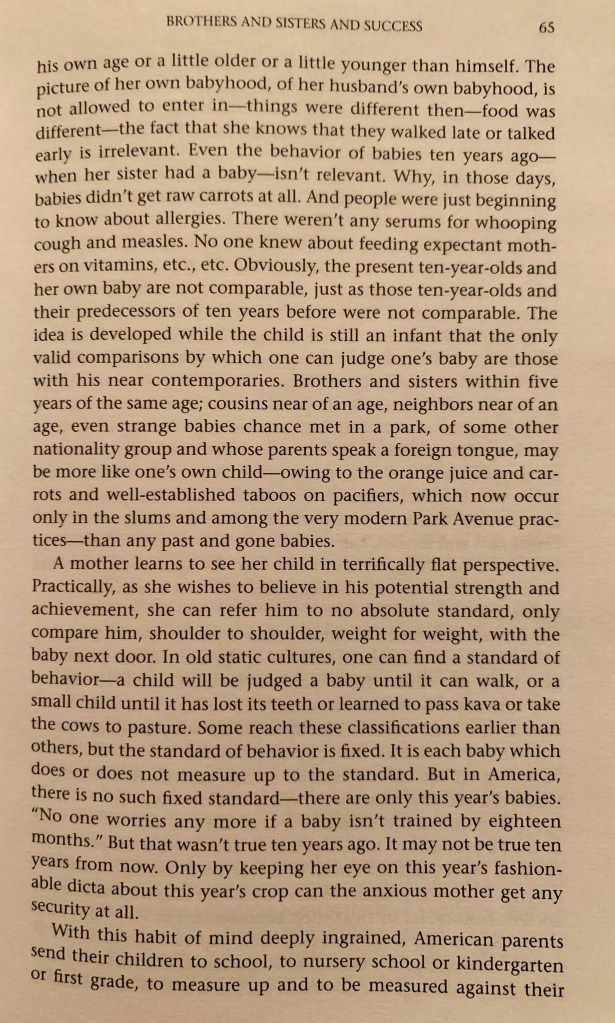
(Berghahn Books 2000)
Oh, she makes me laugh as she explains some important things. In American families, Mead asserts, this focus on comparing kids who are roughly the same age means comparisons of siblings that sets up a particularly American flavor of sibling rivalry. Try to catch the older sister; don’t get outpaced by the younger. The message is one of relentless competition.
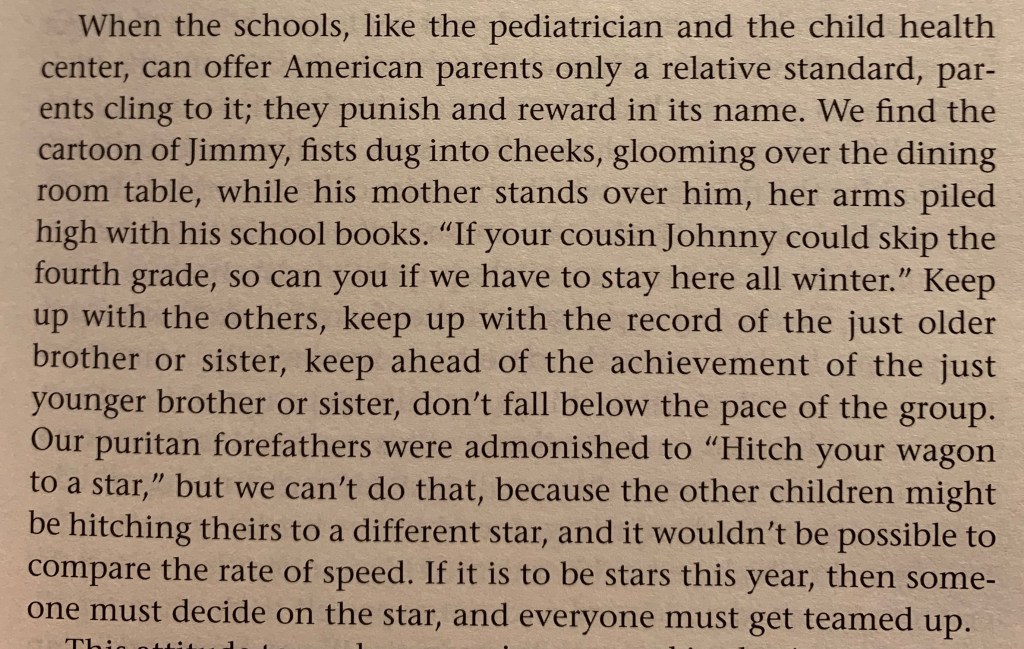
But here is the real gem, when Mead threads the needle to explain how this American family dynamic plays out in our worldview. You’ll recognize some Americans more than others in this!
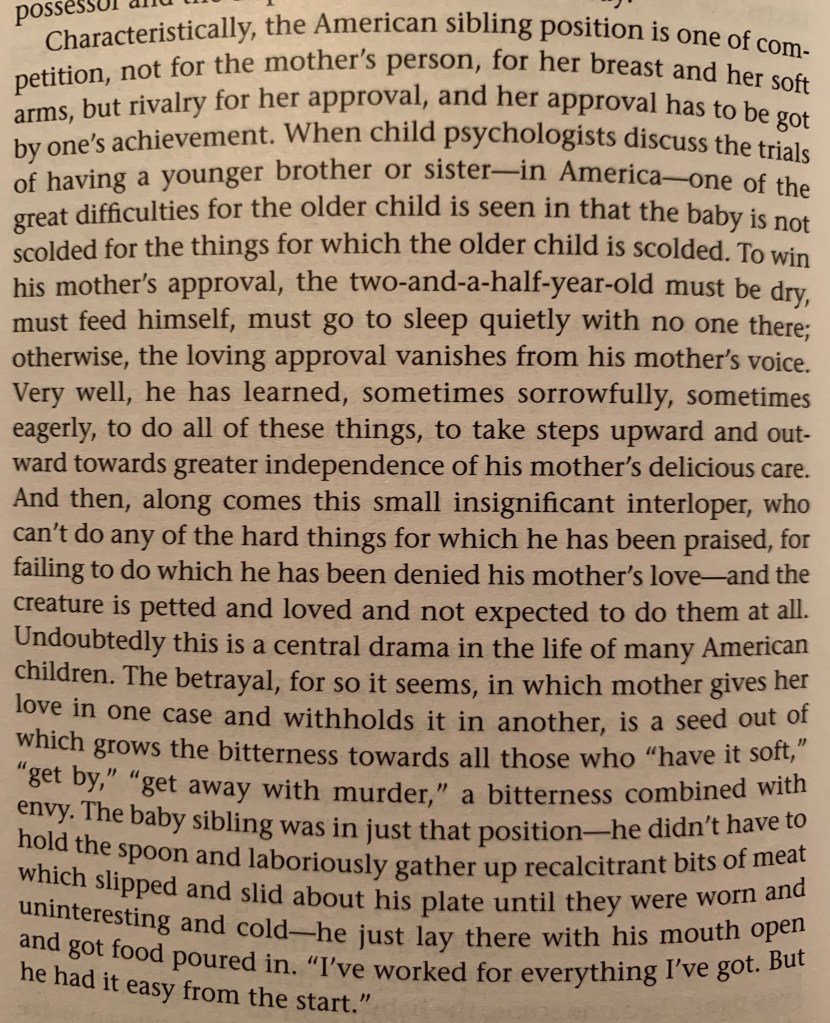
(Berghahn Books 2000)
“The baby sibling was in just that position—he didn’t have to hold the spoon and laboriously gather up recalcitrant bits of meat which slipped and slid around his plate until they were worn and uninteresting and cold—he just lay there with his mouth open and had food poured in.”
‘I’ve worked for everything I’ve got. But he had it easy from the start.’
(Berghahn Books 2000)
Is this relevant in 2020?
Do you hear this bitterness combined with envy in our current political debates? I do. I hear it all the time. I cannot read a comment thread on the Internet without hearing this sentiment spoken like truth. It’s a crux of the American character that creates a lot of our polarization. When it’s not part of your worldview, making an injustice of it is. Of course, you might yell, we just pour the milk into the baby!
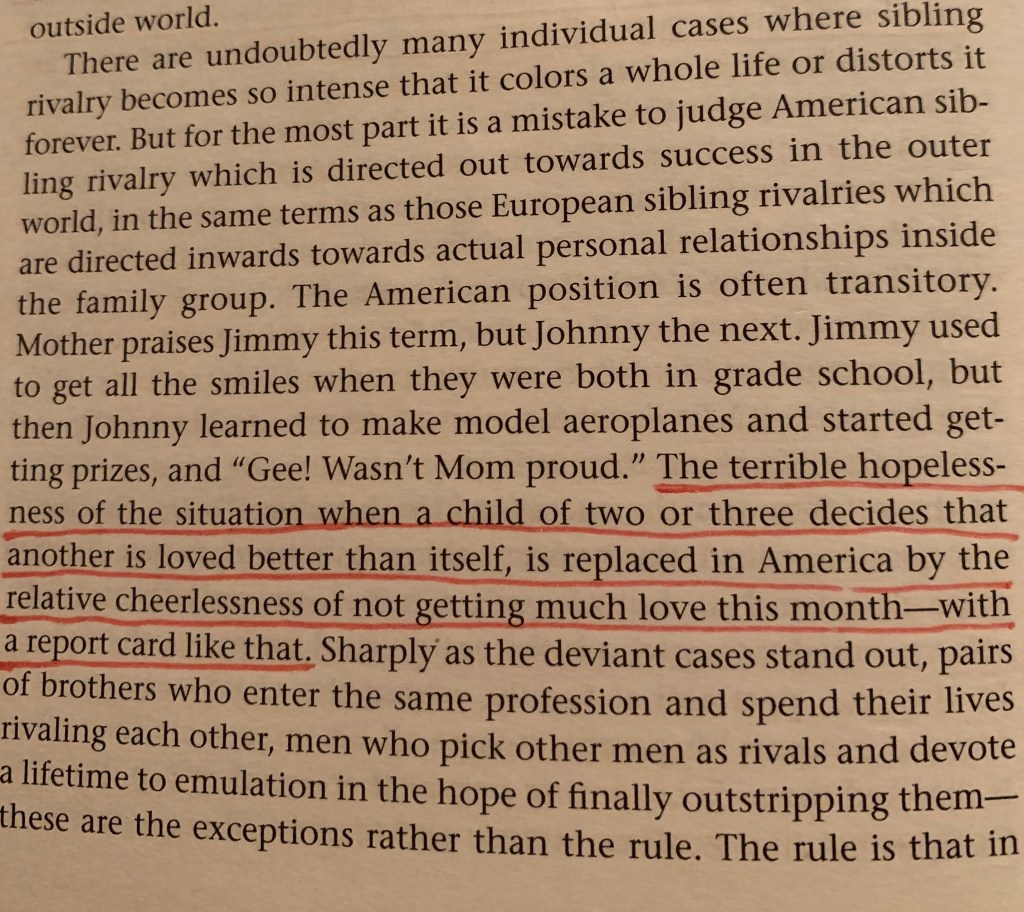
Finally, Mead explains how our parenting toward success creates a sibling rivalry that can look bitter, but is transitory, so not hopeless. I’m mostly including it, because it’s Mead, like so much in this chapter, in fine form.
 Recommended Reading for American Voters