
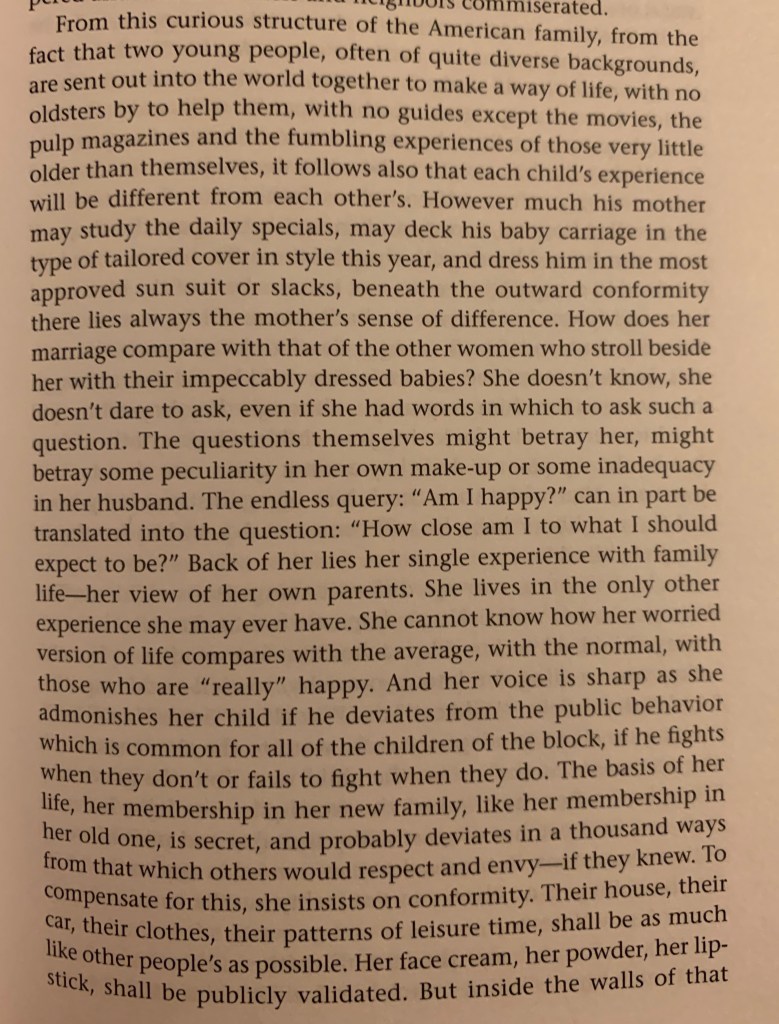
Chapter VI of Margaret Mead’s And Keep Your Powder Dry is titled “Parents, Children and Achievement.”
(Berghahn Books 2000)
(Berghahn Books 2000)
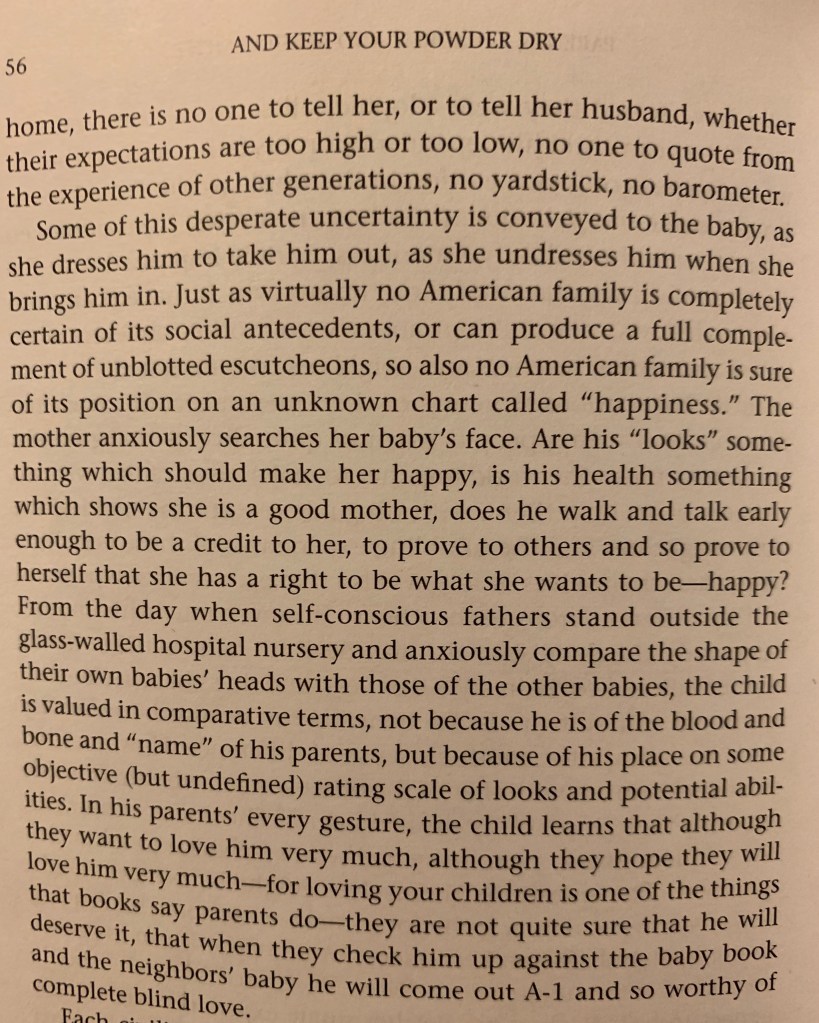
I don’t know about you, but I was born in the 1970s, and every day after school from 1985 until graduation day, I watched The Oprah Winfrey Show. This idea that mothers are always in search of happiness and parenting is something you learn from books is not new to me. Oprah also made the point, in other words and by example, that your value isn’t in your blood or family name, but in how you compare to your peers and contemporaries. Her message was one of rising above your circumstances. She taught pretty explicitly that we are always moving on, with that hope of moving up.
Oprah seemed innovative at the time, but reading Mead, it’s clear that markets for the latest parenting research and fads for American mothers didn’t emerge with Oprah Winfrey lauding the latest expert. Turning to professionals to learn about your baby and happiness, instead of your mom, aunts, cousins, and grandmothers, has been an American tradition for a long time.
(Berghahn Books 2000)
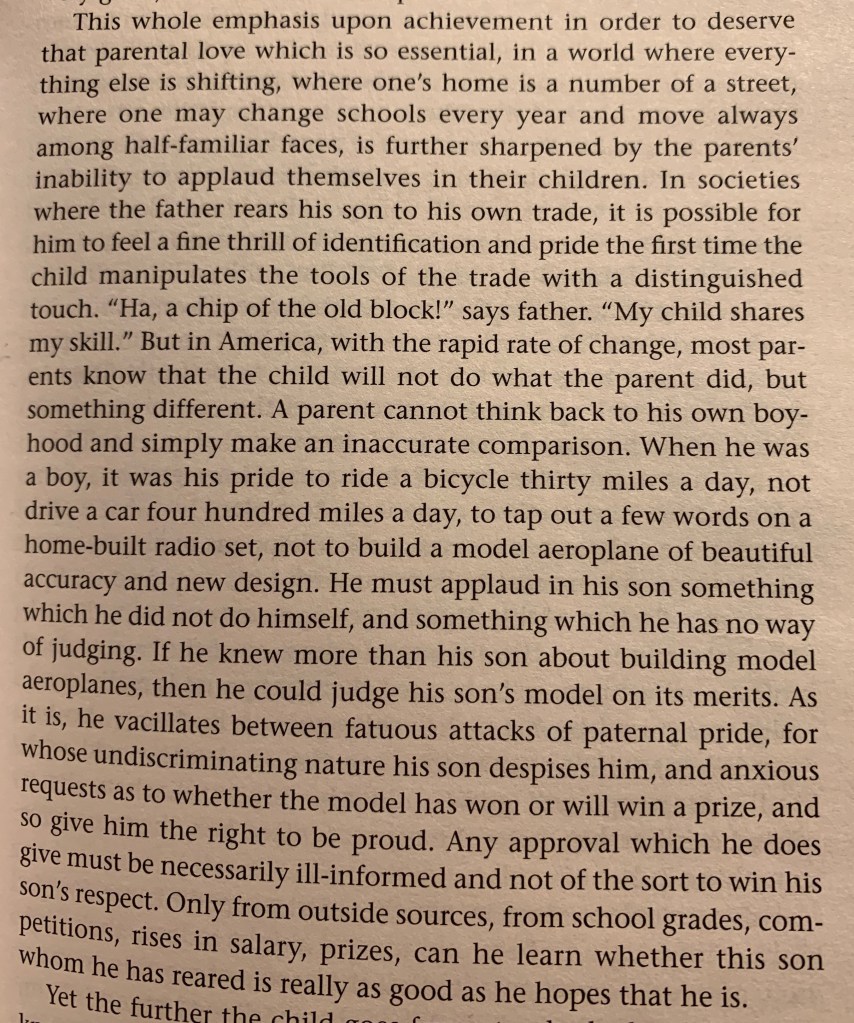
How many American parents and kids feel this way? There are probably thousands of social media groups of thousands of mothers each devoted to asking if their kid has the right GPA, AP courses, leadership positions, and sports wins to qualify for this or that school, or why the right GPA, AP courses, leadership positions, and sports wins didn’t qualify their kid for this or that school. They will ask if the honors their kids do get “count.” “Will Michigan care that my son doesn’t want to be in National Honor Society?” “Will the National Young Leaders Conference look good on the college application?” They might include “did your kid personally get anything out of this opportunity or experience?” but it’s usually secondary to “will this help my kid look accomplished?”
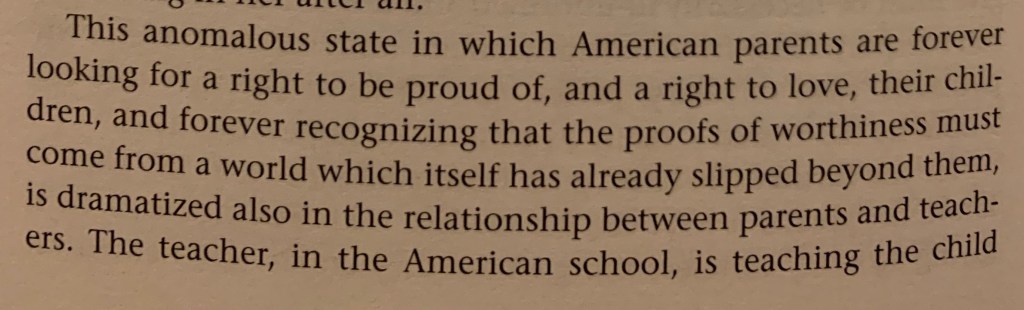
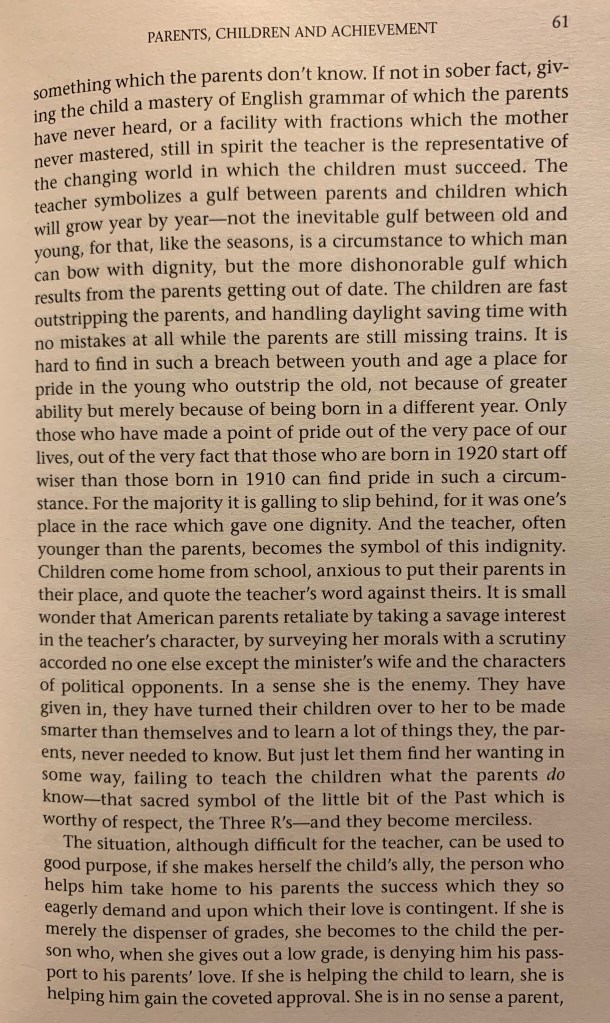
American parents are obsessed with achievement. Mead, then, explains what the relationship between parenting and achievement means for American teachers.
(Berghahn Books 2000)
Think of students learning to code, creating videos on green screens in classrooms, and principal-led flash mobs. How out of date do you feel in a modern American school?
Even now, when public school teachers aren’t held to the same moral scrutiny that they were in the past, we see this taking a “savage interest” in the teacher.
(Berghahn Books 2000)
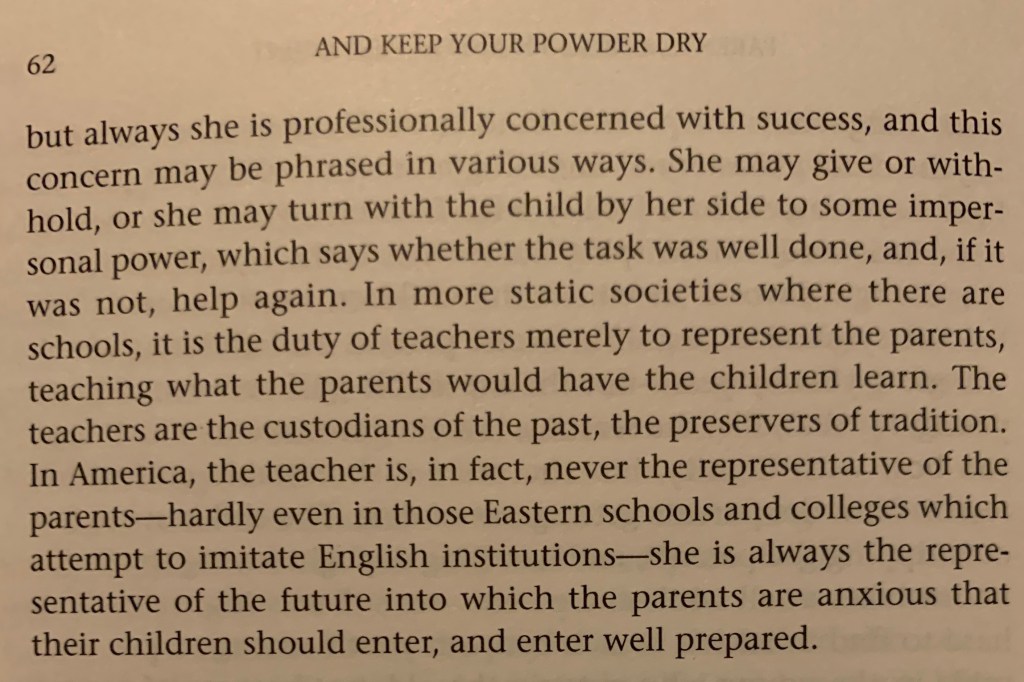
I think, especially when it comes to academic achievement, we have a tendency to think the anxiety is new. It’s strangely reassuring that we drive the kids and the teachers and ourselves bonkers about it, because we are Americans.
 Recommended Reading for American Voters