
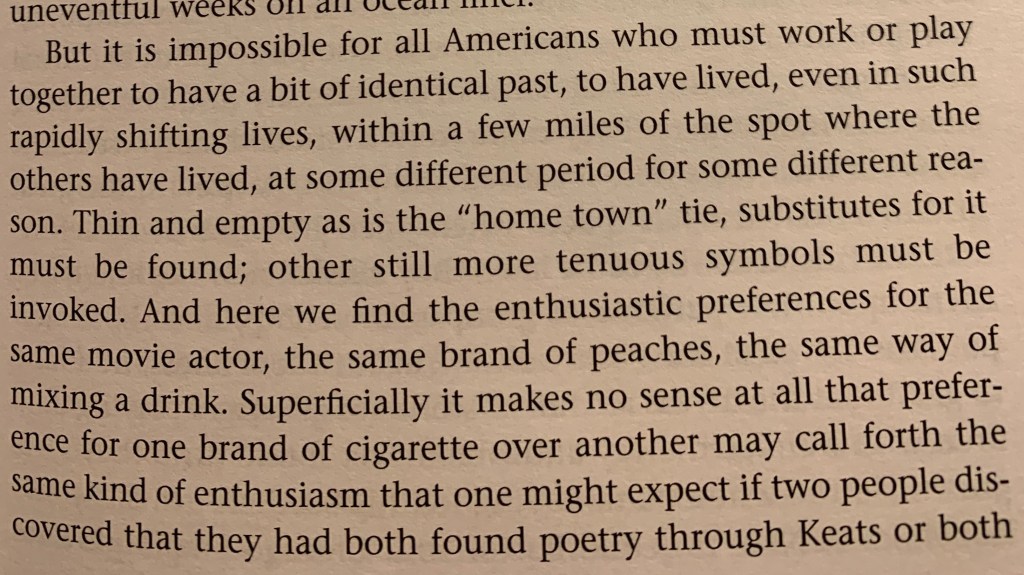
This blog picks up basically where the last one left off in Chapter III, “We Are All Third Generation.” From explaining how Americans love to form bonds with people based on common paths traveled, Margaret Mead starts talking about our propensity to form kinships based on things like favorite beverage.
(Berghahn Books 2000)
Are you a Pepper? You don’t have to answer that, because chances are good that I already know if you are a Pepper.
(Berghahn Books 2000)
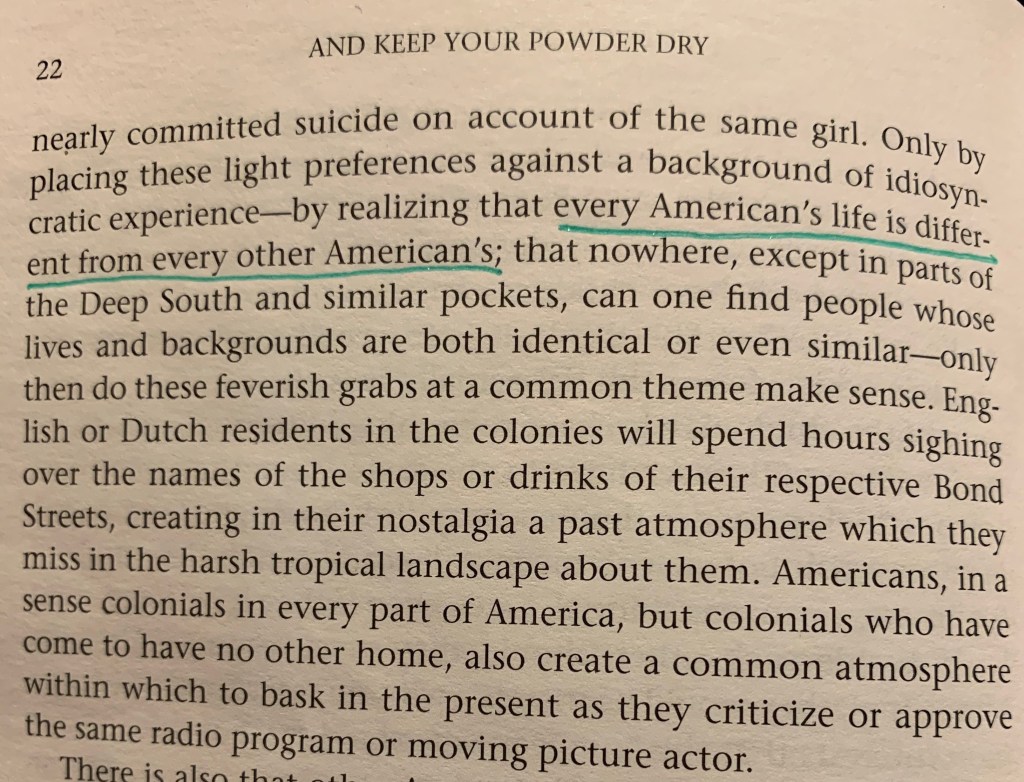
Who amongst us doesn’t judge others by their radio shows?
I’ll keep my opinions of your radio shows to myself, but share that one of my proudest moments was when Kai Ryssdal said my name on air to introduce a letter I wrote to Marketplace. You probably think I listen to serious radio. The fact is that I mostly listen at the level of Her Ripe Begonias.
I approve of you thinking I garden, but I chuckle with those who know I don’t.
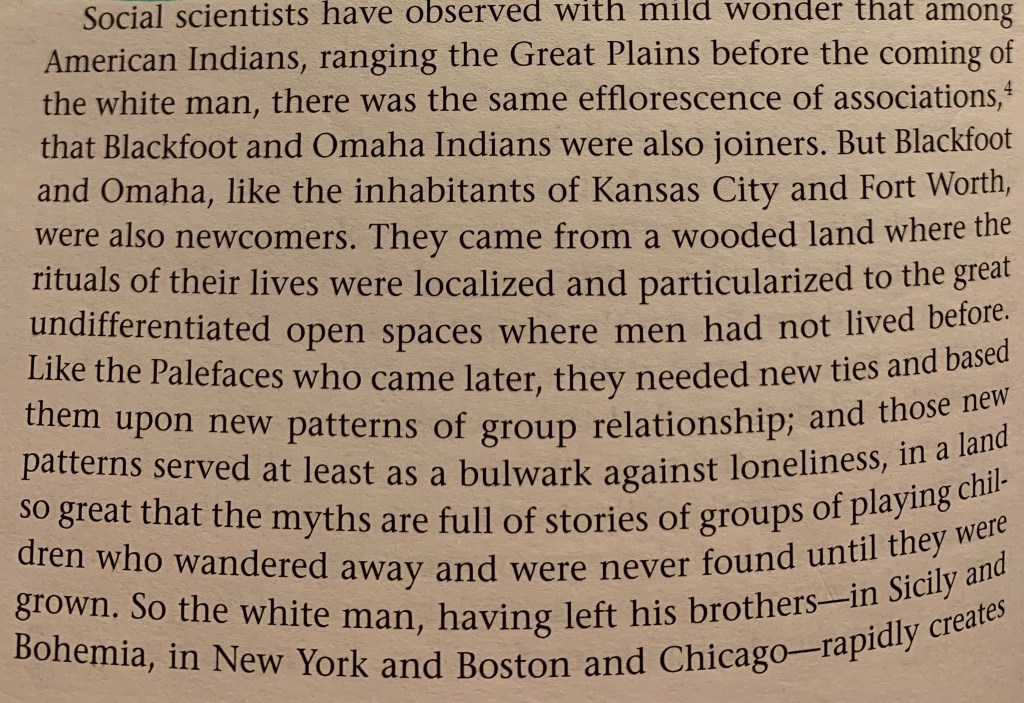
But, seriously, the take-away here isn’t that we are a judgey people, though we are, but that these loose associations are important kinships in a place where people are expected to have grown up differently and come from different places. Interestingly, she also says that this was a characteristic of some native tribes, too. I am not surprised that indigenous peoples would have influenced how Americans form relationships here, but I find this idea fascinating that our land might play some role in how people interact, too.
(Berghahn Books 2000)
As Mead begins to draw contrasts between Americans and other cultures, it can feel strange and uncomfortable. My recommendation is to feel any uncomfortable feelings, and read.
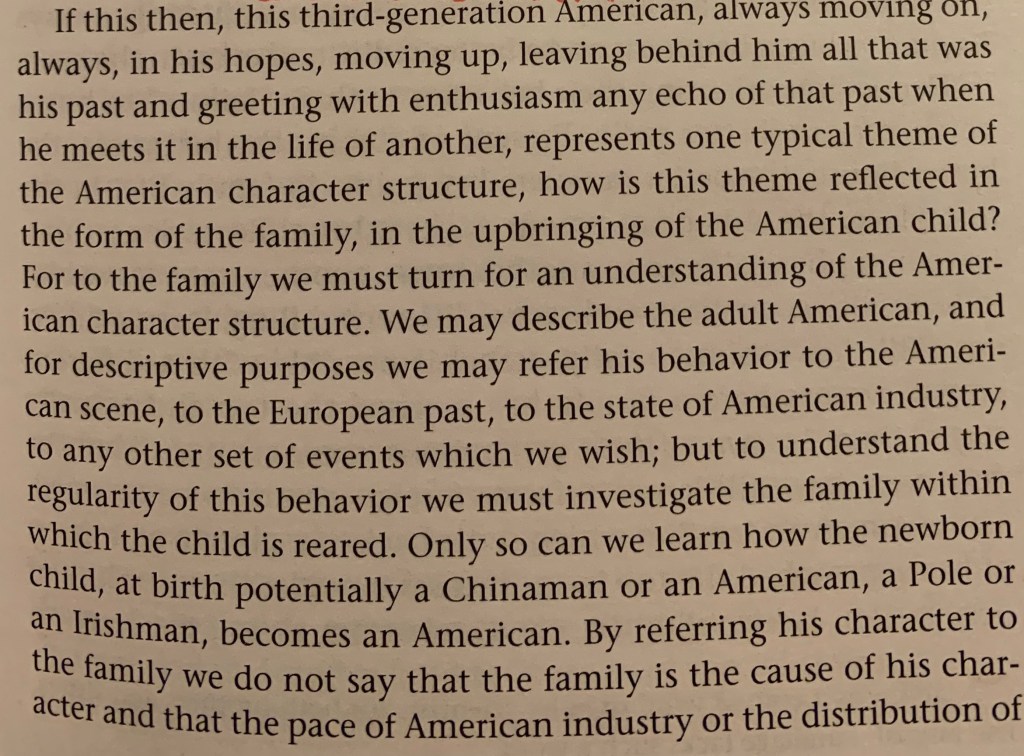
Read this again:
“…this third-generation American, always moving on, always, in his hopes, moving up, leaving behind him all that was his past and greeting with enthusiasm any echo of that past when he meets in the life of another, represents one typical theme of the American character structure…”
(Berghahn Books 2000)
Does that feel like Americans to you?
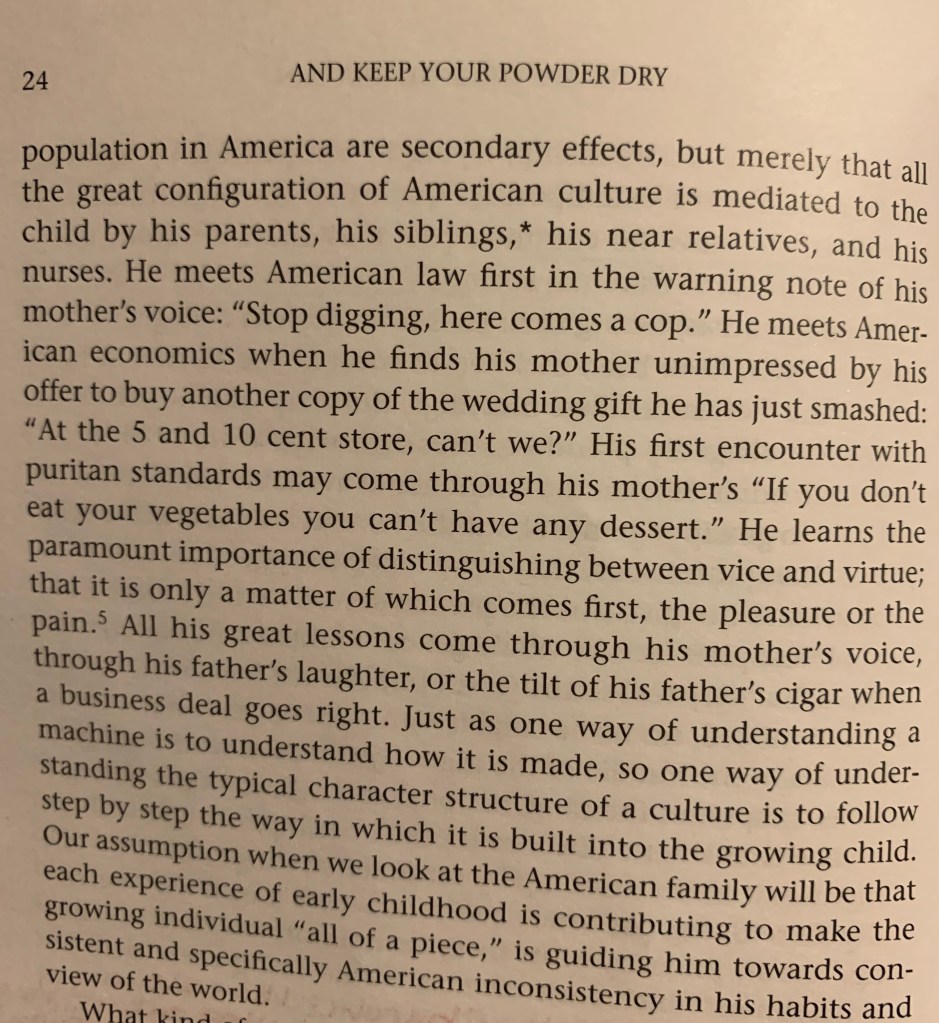
(Berghahn Books 2000)
Our American-ness is built into us, by our parents, the people closest to us, and our society. She’s going to explain how, just as she so eloquently explained why we care so much about our trivial kinships and criticize or approve, well, everything.
Please, keep reading…
 Recommended Reading for American Voters