
(Berghahn Books 2000)
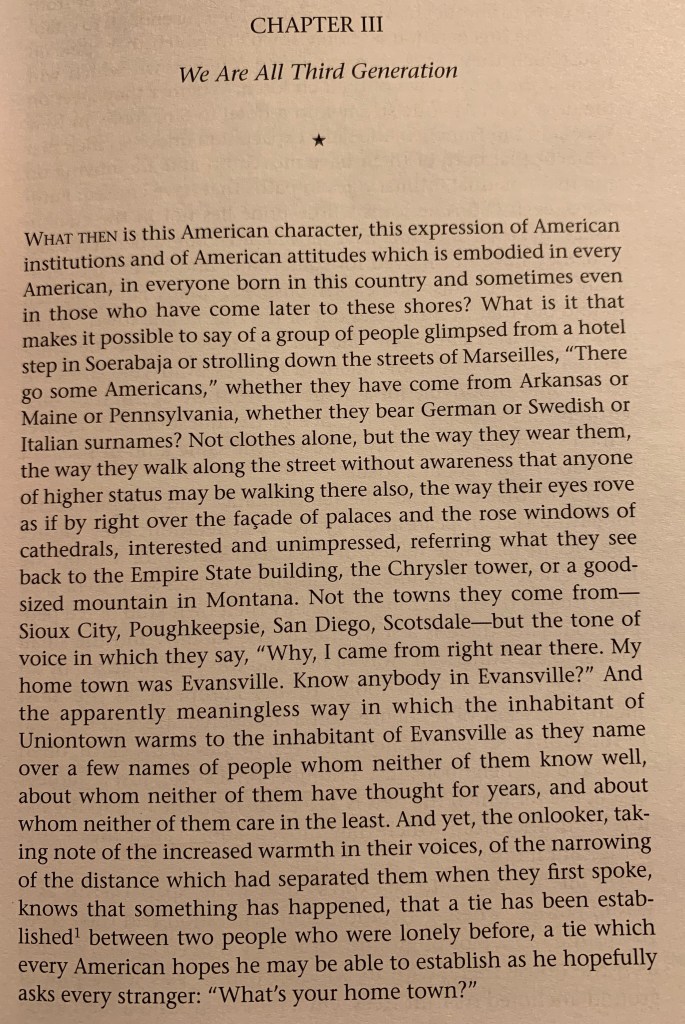
This is one of my favorite pages in the book. It’s descriptions of Americans like this that make me think she was really onto something.
This notion isn’t unfamiliar today: that Americans from anywhere in the country are immediately identifiable as Americans anywhere else in the world. Because of how we walk. And how we don’t care if a king is walking next to us. (Except that we kind of do, and she talks about that, too.)
It’s how she writes of Americans making connections, though, that makes me think dearly of my friends and family now. The way we form kinships with people is still exactly how she describes. We look for common places we’ve lived, places our paths could have crossed but didn’t, our favorite sodas, and the bands we love the most.
First, Mead lays the foundation by describing how this developed from the immigrant experience in America.
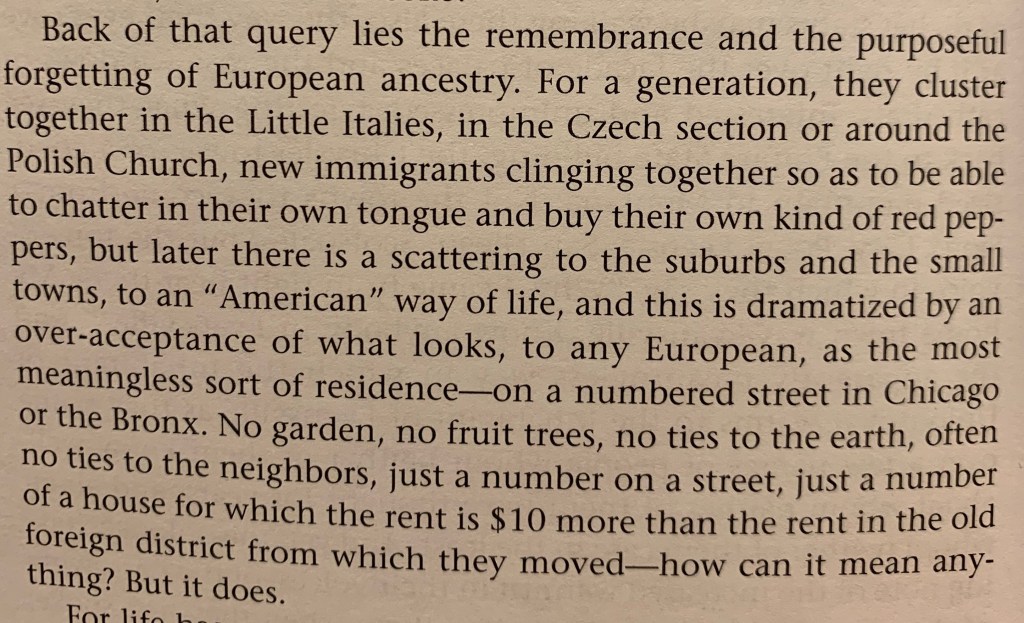
As you read this blog, don’t expect the snapshots of the book to always pick up where the last left off. They don’t. This next one starts with a description of life in the old world and comes back to Americans.
(Berghahn Books 2000)
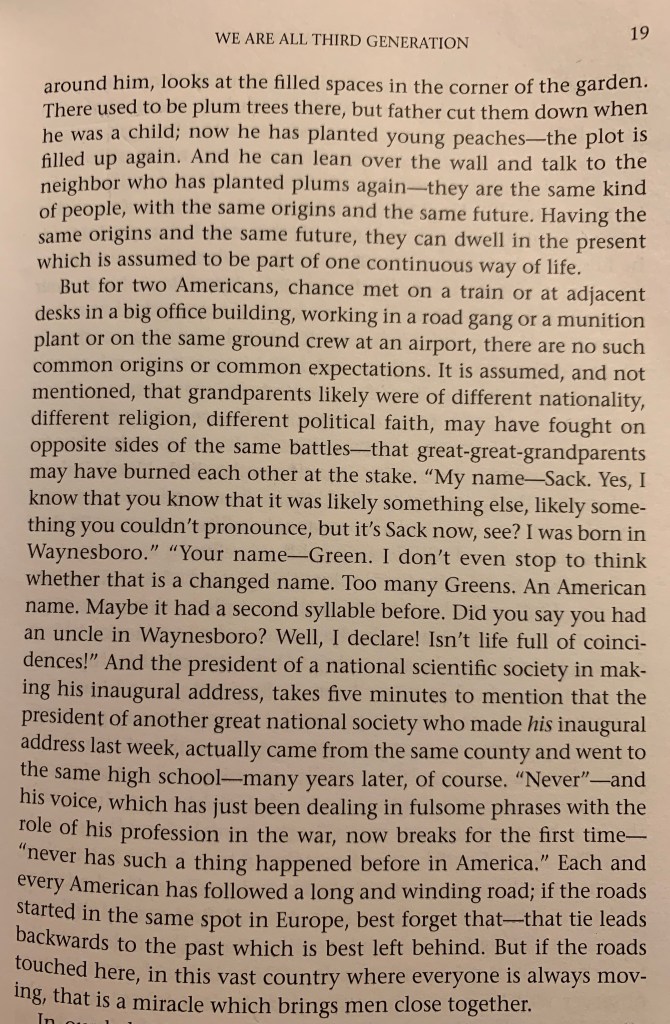
I have a friend in Pittsburgh who reminds me sometimes that we both lived in Apache Junction, AZ as kids; it’s a bond we share even though we didn’t live there at the same time or in the same neighborhood. We’ve seen the sun rise over the same mountain—good enough. Pittsburgh, which is not nearly as transient as much of the country, makes sport of this sort of seeking for common points on the map. People find kinships from living on the same street in college two decades apart or having grandmothers that grew up in neighboring boroughs.
(Berghahn Books 2000)
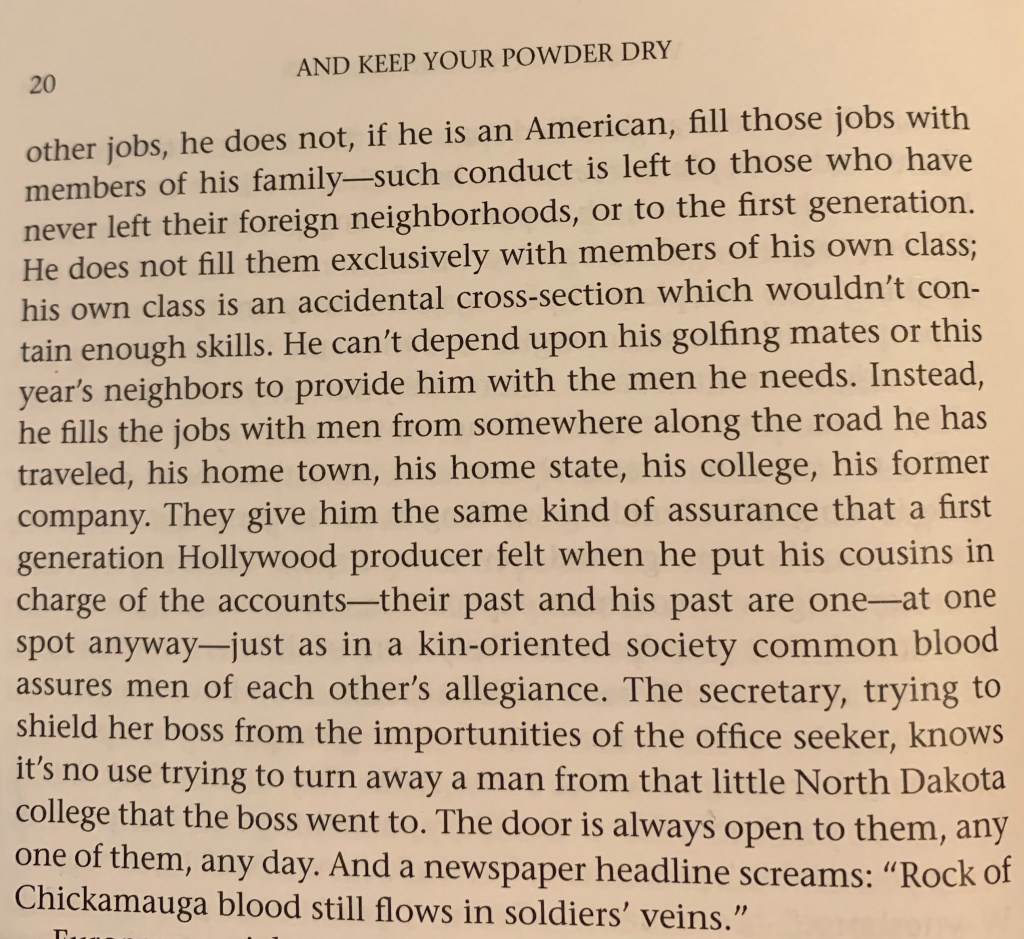
You see that a lot in modern American life. You might know someone heavily involved in the sorority they joined thirty years ago, who can tell you stories of being rescued by a sister she hadn’t met before. On a more modern front, you can find people who form these connections in cyber-space. In 2020, you can find women sending moms they never met to rescue their young adult who got a flat tire on a road trip. They trust her, because the values or trials that brought them together on the Internet (be it homeschooling, breastfeeding, or caring for a diabetic kid) make them trust one another.
And Keep Your Powder Dry benefits from the care Margaret Mead takes in explaining her points. You understand her thinking as she forms her ideas, but more importantly, she is describing an America that you know, because you live in it. She describes people you know, because they are Americans. The America you know is not Mead’s America, but still, she knew yours very well.
 Recommended Reading for American Voters